


As an Amazon Associate I earn from qualifying purchases. This post contains affiliate links.
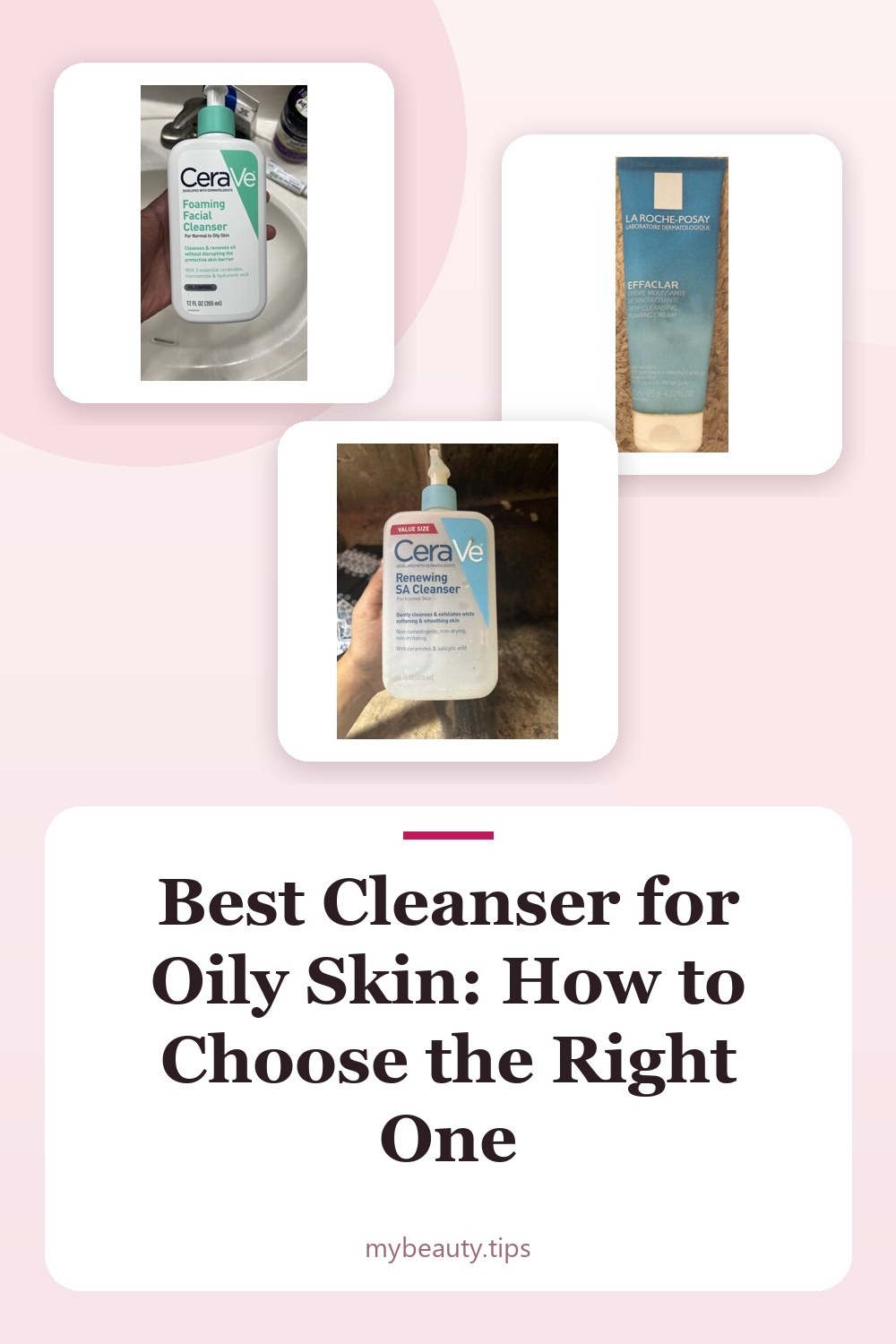
The best cleanser for oily skin is one that removes excess oil, sunscreen and grime while leaving your skin feeling clean but comfortable, not tight or squeaky. For most people that means a gentle gel or foaming cleanser with a skin-friendly pH, and optionally a mild active like salicylic acid if you also deal with clogged pores or breakouts. You don’t need an expensive formula to get there: plenty of cheap cleansers do the job well.
Below you’ll find what actually matters when choosing a face wash, which ingredients help oily skin, which ones tend to backfire, and how Korean-style double cleansing fits in.
Our Top Picks: Cleansers for Oily Skin
These widely available cleansers fit the checklist in this guide. Pick based on whether you just want oil control or also deal with clogged pores.
Best overall: CeraVe Foaming Facial Cleanser
A fragrance-free gel that foams lightly, with ceramides, niacinamide and hyaluronic acid. It removes oil without leaving skin tight, which makes it an easy everyday choice.

Best gel cleanser: La Roche-Posay Effaclar Purifying Foaming Gel Cleanser
Made for oily and acne-prone skin. A soap-free foaming gel that leaves skin feeling clean and fresh.

La Roche-Posay Effaclar Purifying Foaming Gel Cleanser
Photo: Open Beauty Facts (CC BY-SA)
Best for clogged pores: CeraVe Renewing SA Cleanser
Contains salicylic acid, which helps clear pores and smooth rough texture, plus ceramides to keep skin comfortable.

Best for breakouts: Neutrogena Oil-Free Acne Wash
A classic budget pick with salicylic acid for oily, breakout-prone skin. Start with once a day if your skin is easily irritated.

Best Korean pick: COSRX Low pH Good Morning Gel Cleanser
A gentle, low-pH gel cleanser that’s popular for a morning wash or the second step of a double cleanse.

Best budget gentle option: Cetaphil Daily Facial Cleanser
A simple gel cleanser for normal to oily skin. Good if your skin is oily but also a little sensitive.

Why Oily Skin Needs the Right Cleanser
Oily skin produces more sebum than average. Sebum isn’t bad, since it helps protect your skin barrier, but too much of it can make your face look shiny, feel heavy and contribute to clogged pores.
The common mistake is trying to “dry out” the oil with harsh washes. Over-cleansing can irritate your skin and weaken its barrier, leaving it dehydrated, red or flaky while still looking oily. A good cleanser for oily skin balances things: it cleans thoroughly but doesn’t strip.
Signs your current cleanser is too harsh
- Your skin feels tight or “squeaky” right after washing
- You notice stinging, redness or flaky patches
- Your face seems to get oilier a few hours after cleansing
- Your moisturizer or other products suddenly sting
Best Cleanser for Oily Skin: Key Ingredients to Look For
You don’t need all of these. Pick a cleanser built around one or two that match your skin’s needs.
Salicylic acid (BHA)
Salicylic acid is oil-soluble, so it can work inside pores to help loosen buildup. It’s a popular choice if you have blackheads or occasional breakouts along with oiliness. In a cleanser, contact time is short, so it tends to be gentler than a leave-on product. Still, start slowly, a few times a week, and patch test if your skin is reactive.
Gentle surfactants
Surfactants are the ingredients that actually lift oil and dirt. Milder ones such as cocamidopropyl betaine, coco-glucoside, decyl glucoside or sodium cocoyl isethionate are common in gentler formulas. Very high-foaming, sulfate-heavy washes can feel satisfying but may be too stripping for some people.
Niacinamide
Some cleansers include niacinamide, which is widely used in skincare for oily and blemish-prone skin. In a rinse-off product its effect is limited, but it’s a nice bonus rather than a dealbreaker.
Clay (kaolin or bentonite)
Clay cleansers can help absorb surface oil and leave a matte feel. They’re great for very oily skin, though some people find them drying if used twice daily.
Soothing and hydrating extras
Glycerin, panthenol, allantoin, centella asiatica and green tea extract often appear in cleansers to make them more comfortable. Oily skin can still be dehydrated, so these are worth having.
Ingredients and Habits to Be Careful With
- Strong fragrance or essential oils: they can irritate, especially if your skin is also sensitive.
- High amounts of drying alcohol high on the ingredient list in a cleanser or toner can leave skin tight.
- Harsh physical scrubs: large, rough particles can cause irritation. If you want exfoliation, gentle chemical exfoliants are usually easier on skin.
- Washing too often: twice a day is enough for most people, plus after heavy sweating.
- Hot water: lukewarm water is kinder to your skin barrier.
Gel, Foam, Clay or Oil: Which Cleanser Type Suits You?
Gel cleansers
Lightweight and easy to rinse. A gel is a safe all-round pick for oily and combination skin.
Foaming cleansers
Great for removing oil and giving a fresh feel. Look for ones labelled low-pH or gentle so they don’t over-strip.
Clay cleansers
Good for very oily days or hot weather. Some people use one in the evening and a milder gel in the morning.
Oil cleansers and balms
It sounds backwards, but oil-based cleansers can work well for oily skin, because oil dissolves oil, sunscreen and makeup. Choose one that emulsifies (turns milky with water) and rinses off cleanly, then follow with a water-based cleanser.
Shop cleanser for oily skin on Amazon
Cleanser for Oily Skin: The Korean Approach
If you’ve searched for a “cleanser for oily skin Korean” style, you’ve probably come across double cleansing. It’s a two-step evening routine:
- Step 1, oil cleanser or balm: massage onto dry skin to dissolve sunscreen, makeup and excess sebum, then emulsify with water and rinse.
- Step 2, water-based cleanser: a gentle gel or low-pH foam to remove what’s left.
Korean skincare brands often focus on low-pH formulas and soothing ingredients like centella, green tea, heartleaf (houttuynia) or rice. For oily skin, a lightweight cleansing oil plus a mild gel cleanser is a popular combination.
You don’t have to double cleanse every night. It’s most useful when you wear sunscreen, makeup or long-wear products. In the morning, a single gentle wash (or even just water, if your skin feels fine) is usually enough.
Cheap Cleanser vs. Best Cleanser: Does Price Matter?
Here’s the good news: a cleanser sits on your skin for a minute before you rinse it off. That means expensive ingredients have limited time to do much, and a well-formulated cheap cleanser can be just as good as a luxury one.
What matters more than price:
- How your skin feels 15-30 minutes after washing (comfortable, not tight)
- Whether it removes your sunscreen and makeup properly
- A short, sensible ingredient list without heavy fragrance
- A texture you actually enjoy using twice a day
Drugstore and pharmacy brands often make excellent gentle cleansers. Spend your budget instead on products that stay on your skin, like sunscreen or a good moisturizer.
Shop cleanser for oily skin on Amazon
A Simple Routine for Oily Skin
Morning
- Gentle gel or foam cleanser (or a water rinse if your skin isn’t oily overnight)
- Lightweight moisturizer, gel or gel-cream
- Broad-spectrum sunscreen
Evening
- Oil cleanser or micellar water if you wore makeup or sunscreen
- Gentle water-based cleanser
- Treatment product if you use one (introduce new actives one at a time and patch test first)
- Lightweight moisturizer
Yes, oily skin still needs moisturizer. Skipping it can leave your skin dehydrated and uncomfortable.
How to Choose a Cleanser for Oily Skin
Use this quick checklist when you’re shopping:
- Match the texture to your oil level: gel or light foam for most oily skin; clay for very oily or humid climates.
- Add an active only if you need it: salicylic acid for clogged pores or breakouts; otherwise a plain gentle cleanser is fine.
- Look for “gentle”, “low pH” or “non-stripping” on the label, and check that the ingredient list isn’t dominated by harsh surfactants or fragrance.
- Consider your other skin concerns: if you’re also sensitive or acne-prone, keep it fragrance-free and simple.
- Think about your routine: if you wear sunscreen and makeup daily, plan for a first-step oil cleanser or micellar water too.
- Patch test: especially for cleansers with acids, apply to a small area (like along the jaw) for a few days before using it all over.
- Give it time: try a new cleanser for a couple of weeks before judging, unless it irritates you, in which case stop.
If you have persistent acne, painful breakouts or a skin condition, a dermatologist can recommend a routine tailored to you.
Shop cleanser for oily skin on Amazon
FAQ
How often should I wash my face if I have oily skin?
Twice a day is enough for most people: morning and evening. Also wash after heavy sweating. Washing more often than that can irritate your skin without making it less oily in the long run.
Is salicylic acid cleanser safe to use every day?
Many people use one daily without problems, but it depends on your skin. Start with a few times a week, watch for dryness or irritation, and avoid stacking it with lots of other exfoliating products. Patch test first if your skin is reactive.
Can I use an oil cleanser if my skin is oily?
Yes. A rinse-off cleansing oil or balm that emulsifies with water can be great for removing sunscreen and makeup. Follow it with a gentle water-based cleanser so nothing is left behind.
Are cheap cleansers as good as expensive ones?
Often, yes. Because cleansers are rinsed off quickly, formulation and gentleness matter more than price. Many affordable cleansers are excellent for oily skin.
Why does my skin feel oilier after washing?
It can be a sign your cleanser is too harsh or that you’re skipping moisturizer, which may leave your skin dehydrated. Try a gentler cleanser, lukewarm water and a lightweight moisturizer, and see how your skin responds over a few weeks.

