


As an Amazon Associate I earn from qualifying purchases. This post contains affiliate links.
Yes, you can use a vitamin C serum for sensitive skin, but the type and strength matter. Gentler vitamin C derivatives like sodium ascorbyl phosphate, magnesium ascorbyl phosphate or ascorbyl glucoside, or a lower-strength formula, are usually easier to tolerate than high-strength pure L-ascorbic acid. Start slowly, patch test first and pair it with a simple, fragrance-free routine.
Here’s how to pick the right serum, what to avoid and how to work it into your routine without upsetting your skin.
Our Top Picks: Vitamin C Serums for Sensitive Skin
Start with the gentler options first. Whichever you choose, patch test and begin every other day.
Gentlest option: The Ordinary Ascorbyl Glucoside Solution 12%
Uses a vitamin C derivative instead of pure vitamin C, which many sensitive-skin users find easier to tolerate. Very budget-friendly.
The Ordinary Ascorbyl Glucoside Solution 12%
Best derivative serum: Mad Hippie Vitamin C Serum
Built around sodium ascorbyl phosphate, a gentler vitamin C form, in a lightweight serum.
Mad Hippie Vitamin C Serum
Best low-strength pure vitamin C: Klairs Freshly Juiced Vitamin Drop
A Korean serum with a lower strength of pure vitamin C, often recommended as a beginner-friendly option.
Klairs Freshly Juiced Vitamin Drop
Best step-up option: La Roche-Posay Pure Vitamin C10 Serum
Pure vitamin C at 10%. A good next step once your skin is used to vitamin C. Introduce it slowly.
La Roche-Posay Pure Vitamin C10 Serum
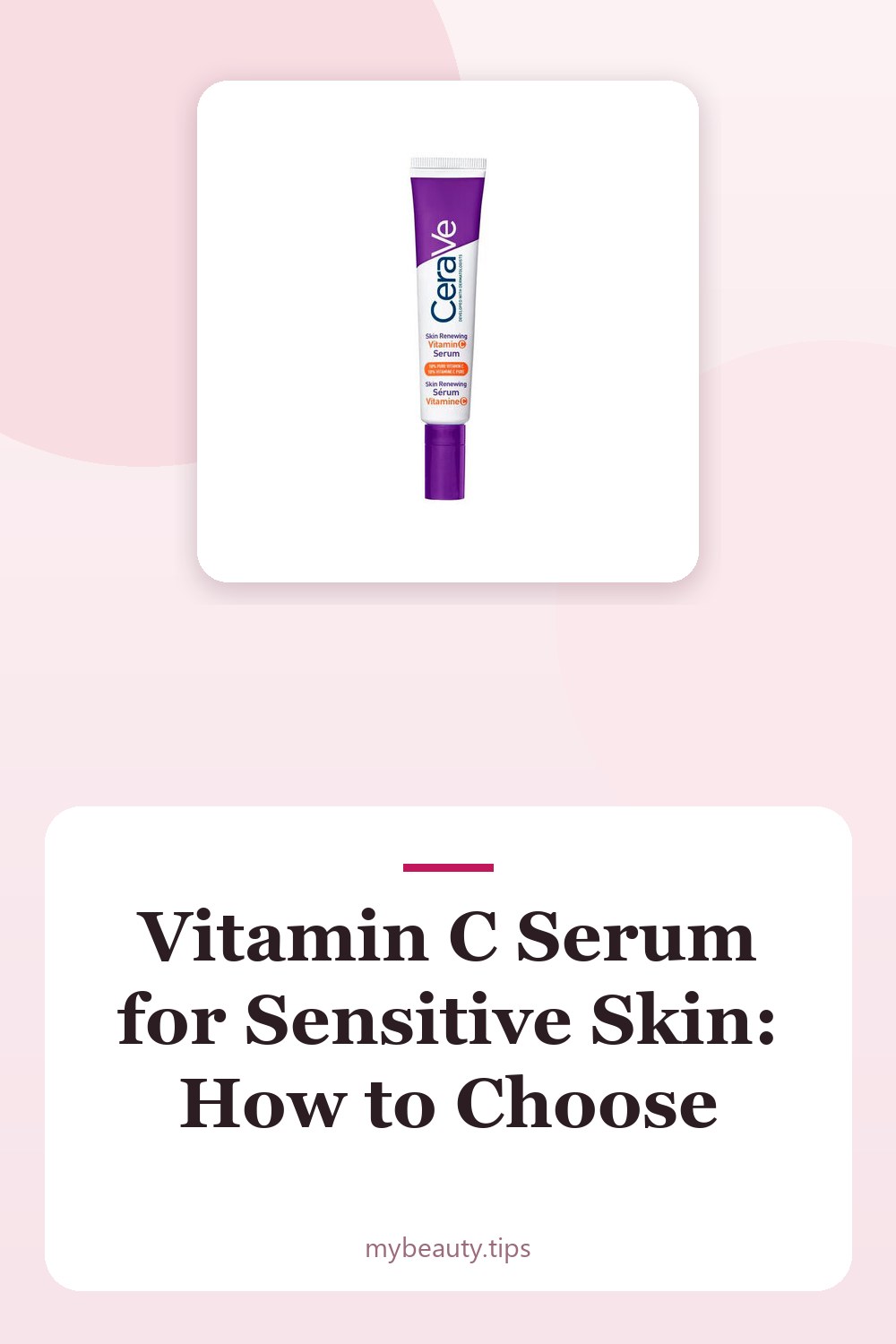
Best with barrier support: CeraVe Skin Renewing Vitamin C Serum
Pure vitamin C combined with ceramides and hyaluronic acid. Stronger than derivatives, so patch test first.

Why People Use Vitamin C Serum
Vitamin C is a popular antioxidant in skincare. It’s commonly used to help brighten dull skin, even out the look of dark spots over time, and support protection against environmental stress when used alongside sunscreen (not instead of it).
The challenge for sensitive skin is that the most researched form, L-ascorbic acid, works best in an acidic formula, which can sting or cause redness for some people, especially at higher strengths.
Forms of Vitamin C: Which Are Gentler?
L-ascorbic acid (pure vitamin C)
The classic form. It’s effective but can be irritating, especially at higher concentrations, and it’s unstable: it can oxidize and turn yellow, orange or brown over time. If your skin is sensitive, a lower strength is usually a better starting point than the strongest product on the shelf.
Vitamin C derivatives
Derivatives are generally more stable and often gentler, though they may be less potent or work more gradually. Common ones include:
- Sodium ascorbyl phosphate (SAP)
- Magnesium ascorbyl phosphate (MAP)
- Ascorbyl glucoside
- 3-O-ethyl ascorbic acid
- Tetrahexyldecyl ascorbate (oil-soluble, often found in oil-based or creamy serums)
For many people with sensitive skin, one of these derivatives is the easiest way to try vitamin C.
Best Vitamin C Serum for Sensitive Skin: What Else to Look For
- Fragrance-free formula: fragrance and essential oils add irritation risk.
- Soothing and hydrating partners: glycerin, panthenol, hyaluronic acid, centella or allantoin can make a serum more comfortable.
- Supporting antioxidants: vitamin E and ferulic acid are often paired with vitamin C.
- Protective packaging: opaque or dark bottles, airless pumps or small sizes help limit exposure to light and air.
- A short ingredient list: fewer extras means fewer potential triggers.
Shop vitamin c serum for sensitive skin on Amazon
What to Avoid If Your Skin Is Sensitive
- Starting with the highest strength: stronger isn’t automatically better, and it raises the chance of stinging.
- Layering with lots of other actives at once, like acids, retinoids and benzoyl peroxide. Using them at different times of day or on alternate days is gentler.
- Using a serum that’s clearly oxidized: if it has turned dark orange or brown or smells off, replace it.
- Applying to broken or freshly irritated skin: wait until your skin has calmed.
Serum for Sensitive Skin: Is Vitamin C Your Best Option?
If vitamin C keeps irritating you, you’re not out of options. Other serums for sensitive skin can address similar goals more gently for some people:
- Niacinamide: widely used for uneven tone and redness-prone skin, and often well tolerated at modest strengths.
- Azelaic acid: used for uneven tone and blemishes; some people with sensitive skin tolerate it well, but it can tingle at first.
- Hydrating serums: hyaluronic acid, panthenol or centella-based serums focus on comfort and barrier support.
Sometimes the best serum for sensitive skin is simply a calming, hydrating one, with sunscreen doing the heavy lifting for prevention.
Cheap Vitamin C Serum vs. Best Vitamin C Serum
A cheap vitamin C serum can work well. Price doesn’t reliably tell you how effective or gentle a serum is. What matters more:
- The form and strength of vitamin C
- Whether it’s fragrance-free
- Packaging that protects it from light and air
- A size you’ll use up before it oxidizes
Smaller, affordable bottles can actually be a plus, since you’ll finish them while they’re still fresh. Some budget options come as powders you mix into another product, which can be very stable but takes a bit of experimenting to get right.
The best vitamin C serum for sensitive skin is the one your skin tolerates and you use consistently, alongside daily sunscreen.
Shop vitamin c serum for sensitive skin on Amazon
How to Introduce Vitamin C Into a Sensitive Routine
1. Patch test first
Apply a small amount on a test area, such as along your jawline or behind your ear, for several days. If there’s no redness, burning or itching, move on to your face.
2. Start slowly
Use it every other day or a few times a week at first. Slight tingling for a moment can happen with acidic formulas, but lasting burning, redness or itching means stop.
3. Keep the rest of your routine simple
- Gentle, fragrance-free cleanser
- Vitamin C serum on dry skin (applying to damp skin can increase tingling for some people)
- Fragrance-free moisturizer
- Broad-spectrum sunscreen in the morning
4. Morning or night?
Many people use vitamin C in the morning under sunscreen, but it can be used at night too. If you also use retinoids or exfoliating acids, consider vitamin C in the morning and the other actives at night.
5. Store it well
Keep the cap tightly closed and store it away from heat and direct light. Follow any storage guidance on the packaging.
What Results to Expect (and What Not To)
Vitamin C is a helpful ingredient, but it isn’t a miracle worker, and it’s worth having realistic expectations before you commit to a new serum.
- Gradual changes: any brightening or evening of tone tends to show slowly, over several weeks of consistent use.
- Sunscreen matters most: without daily sun protection, dark spots tend to come back or darken, whatever serum you use.
- Results vary: skin type, the form of vitamin C and how consistently you use it all play a role.
- Comfort comes first: a serum that irritates your skin can cause redness that makes your tone look less even, not more.
Signs it’s not working for you
- Redness or stinging that lasts more than a few minutes
- Itching, bumps or dry, flaky patches
- Breakouts that start after adding the serum (sometimes from the base formula rather than the vitamin C itself)
If any of these happen, stop using it, let your skin settle with a basic routine, and try a gentler form or a different serum later if you still want to.
How to Choose a Vitamin C Serum for Sensitive Skin
- Pick a gentle form: a derivative (SAP, MAP, ascorbyl glucoside, ethyl ascorbic acid, tetrahexyldecyl ascorbate) or a lower-strength L-ascorbic acid.
- Go fragrance-free: skip essential oils too.
- Look for soothing partners: glycerin, panthenol, hyaluronic acid or centella.
- Check the packaging: opaque, airless or small bottles.
- Match the texture to your skin: watery serums for oily skin, creamier or oil-based ones for dry skin.
- Be patient: brightening effects, if any, appear gradually over weeks, not days.
- Ask a professional if you have rosacea, eczema or very reactive skin, or if you’re unsure whether vitamin C suits you.
Shop vitamin c serum for sensitive skin on Amazon
FAQ
Is vitamin C serum safe for sensitive skin?
Many people with sensitive skin can use it, especially gentler derivatives or lower strengths. Patch test first, start slowly and stop if you get lasting redness, burning or itching.
Why does my vitamin C serum sting?
Pure L-ascorbic acid formulas are acidic, which can cause stinging, especially on dry, irritated or freshly exfoliated skin. Try applying to fully dry skin, using it less often, or switching to a derivative.
Can I use vitamin C with niacinamide?
Many people use both without issues. If your skin is sensitive, you can apply them at different times of day to keep things simple and reduce the chance of irritation.
How do I know if my vitamin C serum has gone bad?
If an L-ascorbic acid serum turns dark orange or brown or smells different, it has likely oxidized and should be replaced. Some formulas have a natural light tint, so compare with how it looked when new.
Does vitamin C replace sunscreen?
No. Vitamin C can complement sunscreen, but it doesn’t replace it. Use a broad-spectrum sunscreen every morning.

