


As an Amazon Associate I earn from qualifying purchases. This post contains affiliate links.
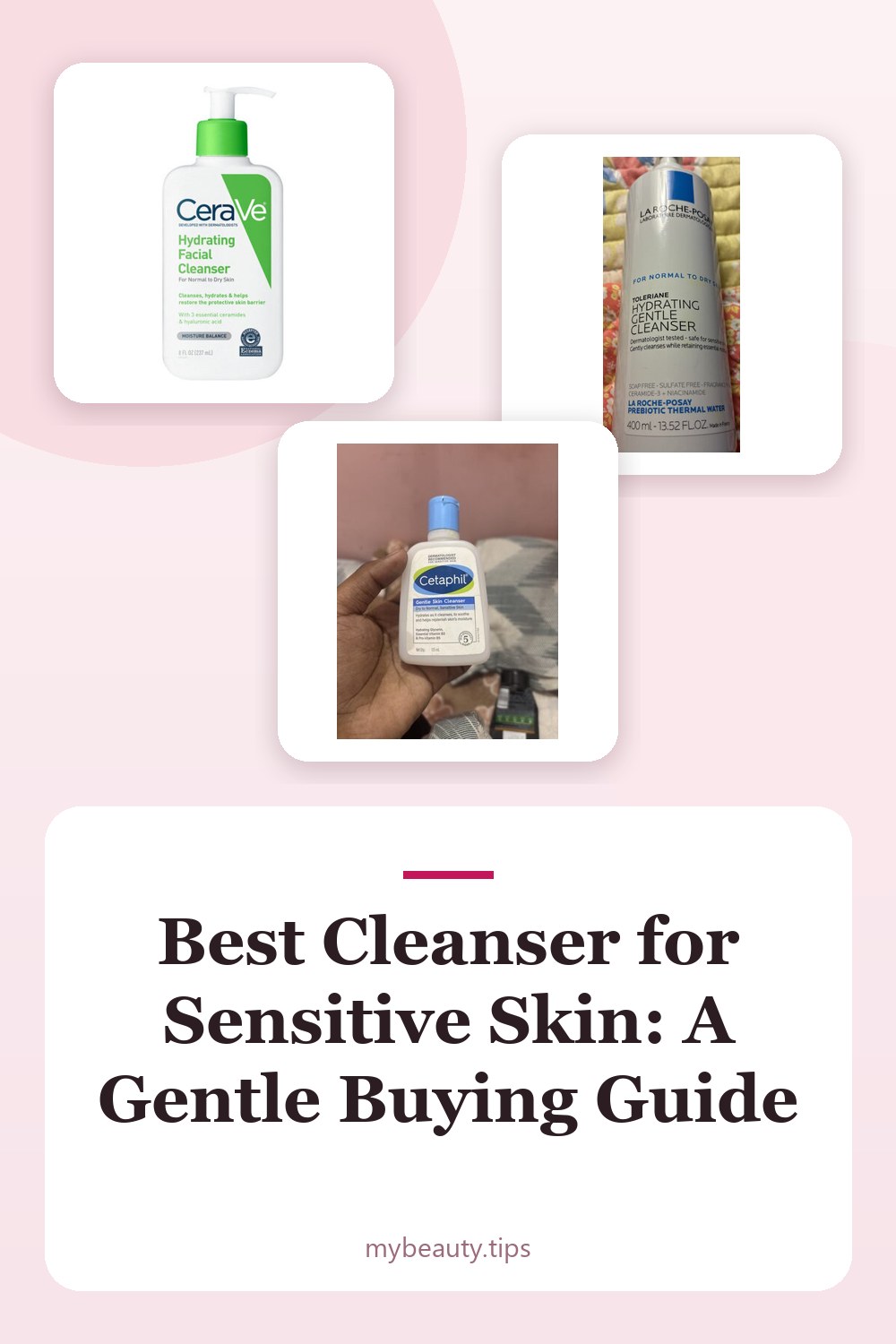
The best cleanser for sensitive skin is a mild, fragrance-free formula, usually a cream, milky lotion, gentle gel or low-pH foam, that cleans without leaving your skin tight, red or stinging. Look for soft surfactants and soothing, hydrating ingredients like glycerin, ceramides and panthenol, and keep the ingredient list as short as practical. You don’t have to spend much: plenty of cheap cleansers for sensitive skin are excellent.
Below we’ll cover what to look for, how to handle skin that’s both sensitive and acne-prone, and where Korean-style cleansers fit in.
Our Top Picks: Cleansers for Sensitive Skin
Gentle, fragrance-free cleansers that clean without stripping.
Best overall: Vanicream Gentle Facial Cleanser
Free of fragrance and dyes, with a short ingredient list. One of the safest picks for very reactive skin.
Vanicream Gentle Facial Cleanser
Best for dry, sensitive skin: CeraVe Hydrating Facial Cleanser
A non-foaming, lotion-like cleanser with ceramides and hyaluronic acid that leaves skin soft, not tight.

Best milky cleanser: La Roche-Posay Toleriane Hydrating Gentle Cleanser
A creamy cleanser with ceramides and niacinamide, made for sensitive skin.

La Roche-Posay Toleriane Hydrating Gentle Cleanser
Photo: Open Beauty Facts (CC BY-SA)
Best budget classic: Cetaphil Gentle Skin Cleanser
A long-time drugstore staple for sensitive skin. Simple, mild and easy to find.

Best extra-gentle option: Avene Tolerance Extremely Gentle Cleanser
Designed for hypersensitive skin. It can be used without water and wiped off, which helps if tap water irritates you.
Avene Tolerance Extremely Gentle Cleanser
What “Sensitive Skin” Usually Means
Sensitive skin isn’t one single condition. People use the term to describe skin that easily stings, burns, itches, flushes or gets dry when exposed to certain products or conditions. It can be linked to a weakened skin barrier, allergies, or conditions like rosacea or eczema.
Because cleansers are used every day, they’re one of the most common culprits behind irritation. The goal is to remove dirt, sunscreen and makeup while disturbing your skin barrier as little as possible.
Signs your cleanser isn’t right for you
- Stinging or burning while washing
- Tight, squeaky feeling afterwards
- Redness that lingers
- Dry, flaky patches or new itchiness
Best Cleanser for Sensitive Skin: Ingredients to Look For
Mild surfactants
Gentler cleansing agents include coco-glucoside, decyl glucoside, lauryl glucoside, sodium cocoyl isethionate and cocamidopropyl betaine. These are common in formulas marketed as gentle.
Hydrating and barrier-supporting ingredients
- Glycerin: helps prevent that stripped feeling.
- Ceramides: support the skin barrier.
- Panthenol and allantoin: soothing and hydrating.
- Squalane or light oils in cream cleansers for added comfort.
Calming botanicals (with caution)
Centella asiatica, oat, green tea and aloe are often included to soothe. Botanicals can still cause reactions in some people, so a patch test is always smart.
Ingredients and Habits to Avoid
- Fragrance and essential oils: among the most frequent causes of irritation and allergic reactions.
- Harsh, high-foaming sulfates like sodium lauryl sulfate can be too stripping for many sensitive skin types.
- Scrubs and gritty particles: physical exfoliation can aggravate reactive skin.
- Cleansing brushes used too often or with pressure.
- Hot water and long washing sessions. Lukewarm water and about 30-60 seconds of gentle massage is plenty.
- Over-washing: twice a day is enough; some sensitive skin does well with just water in the morning.
Shop cleanser for sensitive skin on Amazon
Cleanser for Acne-Prone Sensitive Skin
Skin that’s both acne-prone and sensitive can feel tricky: many acne cleansers are drying, but gentle cleansers don’t target breakouts. A few approaches can help:
- Keep your cleanser gentle and put your acne treatment in a separate leave-on product, where you can control how often you use it.
- If you want an active in your cleanser, low-strength salicylic acid is a common choice. Start a few times a week, patch test first and stop if you notice stinging or flaking.
- Benzoyl peroxide washes are another option for acne, but they can be drying and can bleach towels and fabrics. Short contact time and gentle use is key.
- Avoid scrubbing breakouts, which can increase irritation and redness.
- Choose non-comedogenic, fragrance-free follow-up products too.
If breakouts are persistent, painful or leaving marks, it’s worth seeing a dermatologist rather than experimenting with lots of products.
Cleanser for Sensitive Skin: Korean Options
Korean skincare has a lot of choice for sensitive skin. Many brands focus on low-pH cleansers, which are designed to be closer to the skin’s naturally slightly acidic surface and are often described as gentler.
When looking for a Korean cleanser for sensitive skin, you’ll commonly see:
- Low-pH gel or foam cleansers
- Soothing ingredients like centella (cica), mugwort, heartleaf or green tea
- Gentle cleansing oils or balms for double cleansing
Double cleansing (an oil cleanser followed by a water-based one) can work for sensitive skin if both steps are gentle. If two steps feel like too much, a single mild cream cleanser or micellar water followed by a quick rinse may be enough. As always, check labels for fragrance and essential oils.
Cheap Cleanser for Sensitive Skin vs. Expensive Ones
Cleansers are rinsed off within a minute, so you’re not getting much extra from expensive ingredients. Many of the gentlest, simplest cleansers come from affordable pharmacy and drugstore brands.
A cheap cleanser for sensitive skin is a smart choice if it:
- Is fragrance-free
- Uses mild surfactants
- Leaves your skin feeling soft, not tight
- Removes your sunscreen and makeup well enough (or pairs with a gentle first cleanse)
The best cleanser for sensitive skin is the one your skin tolerates every day, not necessarily the most expensive or popular one.
Shop cleanser for sensitive skin on Amazon
How to Wash Sensitive Skin Gently
- Use lukewarm, not hot, water.
- Apply cleanser with your fingertips, massaging lightly for 30-60 seconds.
- Rinse thoroughly so no residue is left behind.
- Pat dry with a clean, soft towel instead of rubbing.
- Apply moisturizer while skin is still slightly damp.
How to patch test a new cleanser
Wash a small area, like along your jawline, once a day for several days. If there’s no redness, itching or stinging, use it on your whole face. Introduce only one new product at a time so you can tell what’s causing any reaction.
Which Cleanser Texture Suits Your Sensitive Skin?
Cream and milk cleansers
Soft, low-foam and comforting. They’re a great choice for dry or easily irritated skin, and many can be rinsed off or gently wiped away with a damp cloth.
Gentle gel cleansers
Lightweight and refreshing, gels suit oily or combination sensitive skin. Pick one labelled fragrance-free and non-stripping.
Low-pH foam cleansers
Good if you like a little lather. Avoid ones that leave your skin squeaky; that feeling usually means it’s too strong for you.
Micellar water
Handy for removing makeup or as a quick morning cleanse. Use soft pads, press rather than rub, and rinse if your skin reacts to leftover residue.
Cleansing oils and balms
Useful for dissolving sunscreen and makeup without scrubbing. Choose fragrance-free formulas that emulsify and rinse off cleanly.
How to Choose a Cleanser for Sensitive Skin
- Start with fragrance-free: this alone removes many common triggers.
- Pick a texture for your skin type: cream or milk for dry sensitive skin; gentle gel or low-pH foam for oily or combination sensitive skin.
- Check the surfactants: prefer milder ones over harsh sulfates.
- Look for comfort ingredients: glycerin, ceramides, panthenol.
- Keep actives out, or minimal: unless you’re managing acne and your skin tolerates them.
- Know your triggers: if you’ve reacted to an ingredient before, check every label for it.
- Get help when needed: persistent redness, burning or rashes could be rosacea, eczema or an allergy, which a doctor or dermatologist can assess.
Shop cleanser for sensitive skin on Amazon
FAQ
Is micellar water good for sensitive skin?
Many people with sensitive skin like micellar water because it’s gentle and doesn’t need much rubbing. Choose a fragrance-free one, and consider rinsing or following with a mild cleanser so residue doesn’t stay on your skin.
Should I wash my face in the morning if I have sensitive skin?
It depends on your skin. Some people do well with just a splash of lukewarm water in the morning and a proper cleanse at night. If you’re oily or wake up feeling greasy, a gentle wash is fine.
What’s the best cleanser for acne-prone sensitive skin?
Usually a gentle, fragrance-free cleanser paired with a separate acne treatment you can adjust. If you prefer an active cleanser, low-strength salicylic acid used a few times a week is a common starting point. Patch test first.
Are low-pH cleansers better for sensitive skin?
Many people find low-pH cleansers gentler, and they’re popular in Korean skincare. Still, the overall formula matters more than pH alone, so judge by how your skin feels.
Can a cleanser cause redness?
Yes. Fragrance, harsh surfactants, actives or hot water can all trigger redness in sensitive skin. If a cleanser makes your skin red or itchy, stop using it and switch to a simpler formula.

