


As an Amazon Associate I earn from qualifying purchases. This post contains affiliate links.
A good moisturizer for oily skin is lightweight, usually a gel or gel-cream, labelled non-comedogenic, and built on hydrating ingredients like glycerin or hyaluronic acid rather than heavy oils and butters. It keeps your skin hydrated and comfortable without adding shine. And yes, oily skin needs moisturizer too: oil and hydration aren’t the same thing, and skipping moisturizer can leave your skin dehydrated and irritated.
Here’s how to find the right one, whether you want a cheap moisturizer, one with SPF built in, or simply the best moisturizer for your skin.
Our Top Picks: Moisturizers for Oily Skin
Lightweight, widely available moisturizers that hydrate without adding shine.
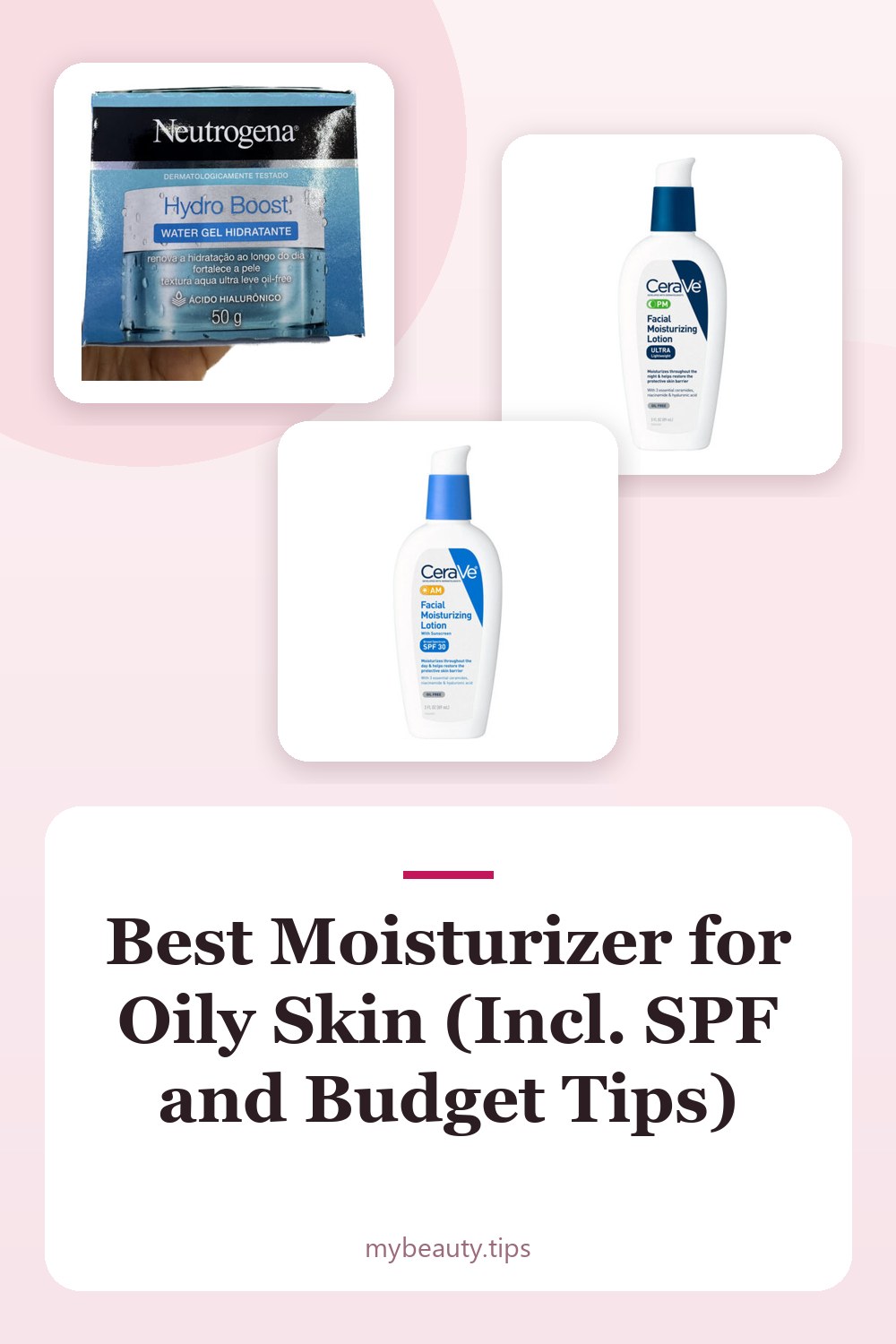
Best gel moisturizer: Neutrogena Hydro Boost Water Gel
A light gel with hyaluronic acid that absorbs fast. A favorite for oily skin that still feels dehydrated.

Best for nighttime: CeraVe PM Facial Moisturizing Lotion
An oil-free, fragrance-free lotion with ceramides and niacinamide. Light enough for oily skin, soothing enough for sensitive skin.

Best with SPF: CeraVe AM Facial Moisturizing Lotion SPF 30
A morning moisturizer with built-in SPF 30, so you can skip a separate sunscreen on low-key days.

CeraVe AM Facial Moisturizing Lotion SPF 30
Photo: Open Beauty Facts (CC BY-SA)
Best for sensitive oily skin: La Roche-Posay Toleriane Double Repair Face Moisturizer
Oil-free, with ceramides and niacinamide to support the skin barrier without feeling greasy.

La Roche-Posay Toleriane Double Repair Face Moisturizer
Photo: Open Beauty Facts (CC BY-SA)
Best oil-control gel: Clinique Dramatically Different Oil-Control Gel
An oil-free gel version of a classic moisturizer, designed for oilier skin types.
Clinique Dramatically Different Oil-Control Gel
Why Oily Skin Still Needs Moisturizer
Oil (sebum) and water are different things. Your skin can produce plenty of oil while still lacking water, especially if you use drying cleansers or acne treatments. Dehydrated oily skin can feel tight yet look greasy, and may become more easily irritated.
A moisturizer helps:
- Keep the skin barrier healthy
- Reduce tightness and flaking, especially when using actives like retinoids or salicylic acid
- Make your skin feel more balanced through the day
- Give makeup a smoother base
What Makes a Good Moisturizer for Oily Skin
Lightweight texture
Gels, gel-creams, water creams and light lotions absorb quickly and don’t leave a heavy film. Rich creams and balms are usually better saved for dry skin.
Humectants
- Glycerin and hyaluronic acid (or sodium hyaluronate) attract water to the skin.
- Panthenol hydrates and soothes.
Light emollients and barrier support
- Squalane and ceramides support the barrier without feeling greasy in most formulas.
- Dimethicone and other silicones can give a smooth, matte-ish finish.
Helpful extras for oily skin
- Niacinamide: commonly used for oily and blemish-prone skin and generally well tolerated.
- Zinc PCA: often added to oil-control formulas.
- Green tea or centella extracts for a soothing touch.
Labels worth noticing
“Non-comedogenic” and “oil-free” suggest the product is designed not to clog pores. These aren’t guarantees, since everyone’s skin is different, but they’re a helpful starting filter.
What to Be Careful With
- Very heavy oils and butters, like large amounts of coconut oil or cocoa butter, which some oily or acne-prone people find pore-clogging.
- Strong fragrance, which can irritate, especially if you’re using actives.
- Too many actives in one product if you already use treatments like retinoids or acids. Keep the moisturizer simple.
- Mattifying formulas that feel drying. Oil control is nice, but your moisturizer should still moisturize.
Shop moisturizer for oily skin on Amazon
Moisturizer for Oily Skin With SPF
A moisturizer with SPF can save a step in the morning, which is appealing when you don’t want too many layers on oily skin. A few things to keep in mind:
- Look for broad-spectrum protection and a sensible SPF level, commonly SPF 30 or higher.
- Apply enough. The SPF on the label is based on a generous amount. Many people apply far less moisturizer than that, which means less protection than you’d expect.
- Reapply if you’re outdoors for a long time, sweating or swimming.
- Finish matters: for oily skin, look for “matte”, “fluid” or “gel” sunscreen-moisturizers. Some mineral formulas can feel heavier or leave a cast; others are very light.
An alternative many oily-skinned people prefer is a light gel moisturizer followed by a separate lightweight sunscreen. If you find an SPF moisturizer you’ll actually apply generously every day, though, that’s a great option.
Use moisturizer with SPF in the morning only. At night, switch to a regular moisturizer without sunscreen.
Cheap Moisturizer vs. Best Moisturizer
Good news for your wallet: a cheap moisturizer for oily skin can be just as effective as a high-end one. The basics that matter, such as glycerin, hyaluronic acid, ceramides, niacinamide and a light texture, are found in many affordable drugstore formulas.
When comparing products, focus on:
- How it feels on your skin a few hours after application
- Whether it causes new breakouts after a few weeks of use
- Whether it works well under sunscreen and makeup
- Fragrance-free or lightly fragranced, depending on your sensitivity
Expensive packaging, luxurious scents and long lists of botanicals don’t make a moisturizer better for oily skin. The best moisturizer is the one that keeps your skin comfortable and doesn’t cause problems.
Shop moisturizer for oily skin on Amazon
How to Use Moisturizer When Your Skin Is Oily
- Apply to slightly damp skin after cleansing and any serum, to help lock in hydration.
- Use a small amount. A pea-size to fingertip amount is often enough for the face if you’re not relying on it for SPF.
- Adjust by season: a gel may be enough in summer, while a gel-cream can feel better in winter.
- Introduce new products one at a time so you can tell what’s working, and patch test if the formula contains actives like niacinamide, acids or retinoids.
- Use blotting papers during the day instead of piling on more powder if shine bothers you.
Matching Your Moisturizer to the Rest of Your Routine
Your moisturizer doesn’t work alone. What you use before and after it can change which texture feels best.
If you use acne treatments
Products like salicylic acid, benzoyl peroxide or retinoids can leave oily skin drier than usual. In that case, a slightly more nourishing gel-cream with ceramides and panthenol may feel better than an ultra-light, mattifying gel. Some people apply moisturizer before a retinoid to buffer it, which can help if you get dryness. Introduce one active at a time and patch test.
If you wear makeup
Let your moisturizer and sunscreen sink in for a few minutes before applying foundation. Heavy layers can cause pilling or make makeup slide off faster. A light moisturizer with a soft, matte finish often works well as a base.
If you live in a humid or hot climate
You may only need a thin layer of a gel moisturizer, or even just a hydrating serum plus sunscreen on very hot days. Listen to your skin: if it feels tight, add more hydration; if it feels heavy, scale back.
If your skin is combination
You don’t have to use the same amount everywhere. Use less on an oily T-zone and a bit more on drier cheeks, or keep a richer cream just for dry patches.
How to Choose a Moisturizer for Oily Skin
- Pick a light texture: gel, gel-cream, water cream or light lotion.
- Check for hydrating ingredients: glycerin, hyaluronic acid, panthenol.
- Look for barrier support: ceramides or squalane.
- Consider a bonus active: niacinamide or zinc if you want help with oiliness, but it’s optional.
- Decide on SPF: a moisturizer with SPF for simplicity, or separate products for flexibility.
- Read the label: non-comedogenic, oil-free and fragrance-free are helpful if you’re acne-prone or sensitive.
- Give it a few weeks: unless you get irritation, which means stop right away.
If you have persistent acne or very reactive skin, a dermatologist can help you find a routine that fits.
Shop moisturizer for oily skin on Amazon
FAQ
Can moisturizer make oily skin worse?
A moisturizer that’s too heavy for your skin can feel greasy or contribute to clogged pores. That’s why lightweight, non-comedogenic formulas are usually recommended. The right one shouldn’t make you oilier.
Is a moisturizer with SPF enough sun protection?
It can be, if it’s broad-spectrum and you apply enough of it. Many people apply too little moisturizer to get the labelled SPF. If you’re unsure, use a separate sunscreen on top or instead.
Should I use moisturizer at night if I have oily skin?
Yes, especially if you use exfoliating or acne treatments at night. A light gel moisturizer is usually enough.
Are cheap moisturizers good for oily skin?
Absolutely. Many affordable moisturizers contain the same core ingredients as pricier ones. Focus on texture and ingredients rather than price.
What’s the difference between oily and dehydrated skin?
Oily skin produces a lot of sebum; dehydrated skin lacks water. You can have both at once, which is why oily skin can feel tight and look shiny at the same time. A hydrating, lightweight moisturizer helps with both.

