


As an Amazon Associate I earn from qualifying purchases. This post contains affiliate links.
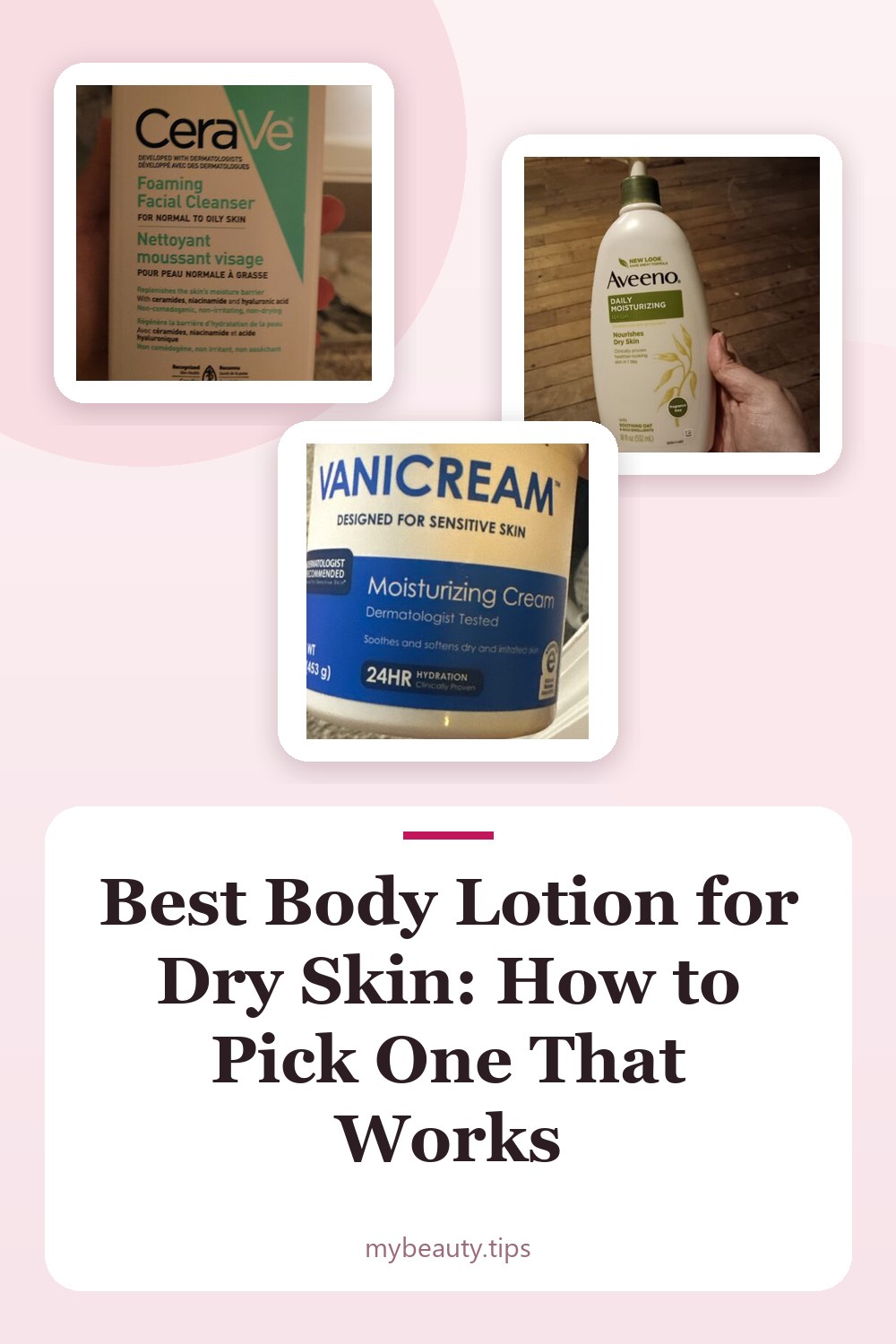
The best body lotion for dry skin is a rich, fragrance-free formula that does three jobs at once: pulls water into the skin (with ingredients like glycerin or hyaluronic acid), softens it (with oils or butters), and locks that moisture in (with ingredients like petrolatum, dimethicone or shea butter). Apply it within a few minutes of showering, while your skin is still slightly damp, and you will see a real difference in a week or two.
That is the short answer. Below you will find our top picks, then we break down which ingredients to look for, which ones to skip, how to get the most out of a cheap body lotion, and how to choose the right texture for your skin.
Our Top Picks: Body Lotions for Dry Skin
These are popular, widely available options that match the ingredient checklist in this guide. Pick based on how dry your skin is and the texture you like.
Best overall: CeraVe Moisturizing Cream
A rich, fragrance-free cream with ceramides and hyaluronic acid. It is thick enough for very dry skin but still absorbs well, and comes in large tubs that last a long time.

Best for rough, flaky skin: Eucerin Advanced Repair Lotion
A fragrance-free lotion with ceramides and urea, which helps smooth rough patches. A good choice if your legs or arms feel scaly.
Eucerin Advanced Repair Lotion
Best lightweight lotion: Aveeno Daily Moisturizing Lotion
Made with colloidal oatmeal, which is known for soothing dry, itchy skin. It feels light, so it works well in the morning or in warmer weather.

Best for sensitive skin: Vanicream Moisturizing Cream
Free of fragrance and dyes, with a simple formula designed for sensitive skin. A safe pick if most lotions make you itch.

Best for bumpy skin: AmLactin Daily Moisturizing Lotion
Contains lactic acid, which hydrates and gently exfoliates rough, bumpy skin. It can tingle on broken or freshly shaved skin, so do a patch test first.

Best for cracked spots: Aquaphor Healing Ointment
Not a lotion but a petrolatum-based ointment that seals in moisture. Use it on extra-dry areas like heels, elbows, knees and hands, especially overnight.

Why Your Skin Gets So Dry
Your skin has a natural protective layer that keeps water in and irritants out. When that layer is weakened, water escapes faster and skin starts to feel tight, rough, flaky or itchy. Common causes include:
- Hot showers and long baths, which strip away natural oils.
- Harsh soaps and strongly foaming body washes.
- Cold, windy weather and low humidity, especially in winter.
- Indoor heating and air conditioning, which dry out the air.
- Age, since skin tends to produce less oil over time.
A good lotion cannot change the weather, but it can help repair that protective layer so your skin holds on to moisture much better.
What Makes a Good Body Lotion for Dry Skin
Most moisturizers are built from three kinds of ingredients. The best body lotions for dry skin include all three.
1. Humectants: they attract water
Humectants draw water into the top layer of your skin. Look for:
- Glycerin, one of the most common and reliable options.
- Hyaluronic acid (often listed as sodium hyaluronate).
- Urea, which also gently smooths rough, flaky patches.
- Lactic acid, which hydrates and lightly exfoliates.
2. Emollients: they soften and smooth
Emollients fill in the tiny gaps between skin cells so skin feels soft instead of rough. Look for:
- Ceramides, which are a natural part of your skin barrier.
- Plant oils such as sunflower, jojoba or squalane.
- Fatty alcohols like cetyl or cetearyl alcohol. Despite the name, these are not drying.
3. Occlusives: they seal moisture in
Occlusives form a light layer on top of the skin that slows down water loss. Look for:
- Petrolatum (petroleum jelly), one of the most effective sealers available.
- Dimethicone, which feels silky and not greasy.
- Shea butter and cocoa butter.
- Lanolin, very rich and good for extremely dry areas.
Ingredients to Avoid If Your Skin Is Dry
Some ingredients can make dry skin worse, especially if it is also sensitive:
- Added fragrance and perfume, a common cause of irritation and itching.
- High amounts of drying alcohol (often listed as “alcohol denat.” near the top of the list).
- Strong essential oils like peppermint, eucalyptus or citrus oils, which can sting dry or cracked skin.
A tip: if a lotion smells strongly, it is not necessarily better. For very dry or itchy skin, “fragrance-free” is usually the safer choice. Note that “unscented” can sometimes mean a masking fragrance was added, so check the ingredient list.
Lotion, Cream or Balm: Which Texture Do You Need?
The texture of a moisturizer tells you a lot about how much it can do.
- Lotions are lighter and contain more water. They spread easily and absorb fast, making them good for mildly dry skin and for summer.
- Creams are thicker, with more oil. They are a great everyday choice for dry skin, especially in colder months.
- Balms and ointments are the richest. They are perfect for very dry spots like elbows, knees, heels and hands, or for overnight use.
Many people with dry skin do best with a cream for the body and a balm for the roughest areas.
How to Use Body Lotion for the Best Results
Even the best body lotion will disappoint if it is used the wrong way. These simple habits make a big difference:
- Moisturize within 3 minutes of showering. Gently pat your skin with a towel so it is still a little damp, then apply. This traps water in the skin.
- Use lukewarm water, not hot, and keep showers short.
- Switch to a gentle, creamy body wash instead of harsh, very foamy soap.
- Apply twice a day if your skin is very dry: once after your shower and once before bed.
- Do not forget your legs and arms. Shins and forearms are often the driest areas.
- Use a humidifier in your bedroom during winter if the air is very dry.
The Best Body Lotion on a Budget
Good news: you do not need to spend much. A cheap body lotion can work just as well as an expensive one, because the ingredients that matter most for dry skin, like glycerin, petrolatum, ceramides and dimethicone, are not expensive ingredients.
To get the best value:
- Buy pump bottles or large tubs, which usually cost less per use.
- Pay for formula, not fragrance or fancy packaging.
- Check pharmacy and drugstore brands, which often focus on simple, effective, dermatologist-style formulas.
- Read the first five ingredients. If you see glycerin plus an occlusive like petrolatum, dimethicone or shea butter near the top, it is a solid choice.
Shop body lotion for dry skin on Amazon
Body Lotion for Dry Skin: Tips for Women
Dry skin can show up differently at different stages of life. Many women notice their skin becoming drier during pregnancy, after pregnancy, or around menopause, as hormone changes affect oil production. If that sounds familiar:
- Choose a richer cream rather than a light lotion.
- Look for ceramides to help strengthen the skin barrier.
- Pick fragrance-free options if your skin has become more sensitive than it used to be.
- If you are pregnant or breastfeeding, check with your doctor before using lotions with strong active ingredients.
Shaving can also dry out the legs, so applying lotion right after shaving can help calm and soften the skin.
How to Choose the Right Body Lotion for Dry Skin
Use this quick checklist when shopping:
- Check your dryness level. Mild dryness: a lotion is fine. Moderate dryness: go for a cream. Cracked or very rough skin: add a balm.
- Look for all three types of ingredients: a humectant (glycerin, hyaluronic acid, urea), an emollient (ceramides, oils) and an occlusive (petrolatum, dimethicone, shea butter).
- Prefer fragrance-free, especially if you have itching, redness or sensitive skin.
- Consider urea or lactic acid for rough, bumpy or flaky skin. These can tingle a little on broken skin, so do a patch test first: apply a small amount to your inner arm and wait 24 hours.
- Think about when you will use it. A fast-absorbing lotion is better for mornings. A thicker cream works well at night.
- Do not judge by price. Read the ingredients instead.
Shop body lotion for dry skin on Amazon
FAQ
What is the best body lotion for very dry skin?
For very dry skin, a thick cream or balm usually works better than a light lotion. Look for a formula with glycerin or urea to hydrate, ceramides to repair, and petrolatum or shea butter to seal in moisture. Fragrance-free is the safest choice.
Is a cheap body lotion as good as an expensive one?
Often, yes. The ingredients that help dry skin the most are affordable. A budget lotion with a good ingredient list can work just as well as a luxury one. You are often paying extra for fragrance, packaging or the brand name.
How often should I apply body lotion if I have dry skin?
At least once a day, right after your shower. If your skin is very dry, apply it twice a day, adding a second layer before bed.
Why is my skin still dry after using lotion?
Common reasons are applying lotion to fully dry skin, using a lotion that is too light, taking very hot showers, or using a harsh soap. Try applying a richer cream on damp skin and switching to a gentle wash. If dryness comes with strong itching, redness or cracking that does not improve, it is a good idea to see a doctor or dermatologist.
Can I use face moisturizer on my body?
You can, but it is usually not worth it. Face moisturizers come in small sizes and are often lighter. Body skin, especially on the legs and elbows, is thicker and usually needs a richer formula.

