


The pursuit of smooth, radiant, “glowing” skin often leads us down one particular aisle: the one filled with exfoliants. For generations, the path to a brighter complexion was paved with gritty scrubs and polishing grains. The satisfying feeling of physically buffing away dullness is a deeply ingrained beauty ritual. But what if that satisfying scrub is doing more harm than good?
In the modern skincare landscape, a quieter but far more powerful revolution has taken place, led by a family of ingredients known as “acids.” These chemical exfoliants promise to deliver superior results without the harsh, mechanical scrubbing. This has created a major point of confusion for consumers: Should you stick with the familiar scrub or venture into the world of acids?
The answer is not a matter of trend; it’s a matter of skin science. This guide will provide a definitive breakdown of both physical and chemical exfoliation. We will explore how each method works, debunk dangerous myths, and provide a clear framework to help you choose the safest and most effective option for your unique skin type and goals.
Part 1: The Core Principle – Why Exfoliation is Non-Negotiable
Before we compare methods, we must understand the mission. Your skin is in a constant state of renewal. A process called cell turnover pushes new, healthy skin cells to the surface while old, dead cells are shed. As we age, this process slows down.
Exfoliation is the process of helping your skin shed those stubborn, built-up dead skin cells (keratinocytes) from its outermost layer (the stratum corneum).
Why is this so important?
- It Boosts Radiance: Removing the dull, opaque layer of dead cells immediately reveals the fresher, brighter skin underneath.
- It Unclogs Pores: Dead skin cells are a primary component of the plugs that lead to blackheads and breakouts.
- It Smooths Texture: A build-up of dead cells creates a rough, uneven surface. Exfoliation refines this texture for a smoother feel.
- It Enhances Product Absorption: By clearing away the surface barrier, you allow your expensive serums and moisturizers to penetrate more effectively.
This is a critical “Treat” step in any effective skincare routine, a concept we introduced in our Foundational Guide to Building a Skincare Routine.
Part 2: The Old Guard – A Deep Dive into Physical Exfoliation
Physical exfoliation, also known as mechanical exfoliation, is the manual method. It involves using a tool or a product with an abrasive texture to physically rub or slough off dead skin cells from the surface.
How it Works: Friction. The particles in a scrub, the bristles of a brush, or the texture of a cloth physically dislodge the dead cells.
Common Types of Physical Exfoliants:
- The Harsh & Harmful: These are the scrubs you must avoid. They often contain large, jagged particles like crushed fruit pits (apricot, walnut), nutshells, or coarse sugar crystals. These sharp edges can cause microscopic tears (micro-tears) in the skin, leading to inflammation, a compromised skin barrier, and even scarring over time.
- The Gentler Alternatives: If you choose to physically exfoliate, opt for products with fine, perfectly round, or dissolvable particles. These include jojoba beads, fine rice powder, oat flour, or bamboo powder.
- Tools: This category also includes facial brushes (e.g., Clarisonic), konjac sponges, and muslin cloths.
Who Is It For? Due to the high risk of irritation, most dermatologists advise against harsh facial scrubs. Gentler physical exfoliants may be suitable for those with resilient, non-sensitive, and non-acne-prone skin. They can provide instant gratification for removing flaky skin, but they are often better suited for the tougher skin on the body (e.g., elbows and knees).
The Pros and Cons of Physical Exfoliation
| Pros | Cons |
| Instant Gratification: Skin feels immediately smoother to the touch. | High Risk of Micro-Tears & Irritation: Can damage the skin barrier. |
| Feels Satisfying: The scrubbing sensation makes you “feel” like it’s working. | Uneven Exfoliation: It’s impossible to apply even pressure across the entire face. |
| Simple to Understand: No complex ingredient knowledge needed. | Can Worsen Inflammation: Can spread bacteria and aggravate active acne breakouts. |
Part 3: The New Standard – A Deep Dive into Chemical Exfoliation
Chemical exfoliation sounds intimidating, but it is often a far gentler and more effective method. It uses skin-safe acids or enzymes to dissolve the intercellular “glue” (desmosomes) that holds dead skin cells together, allowing them to shed evenly and naturally.
How it Works: Dissolution. Instead of scrubbing cells off, it melts the bonds between them.
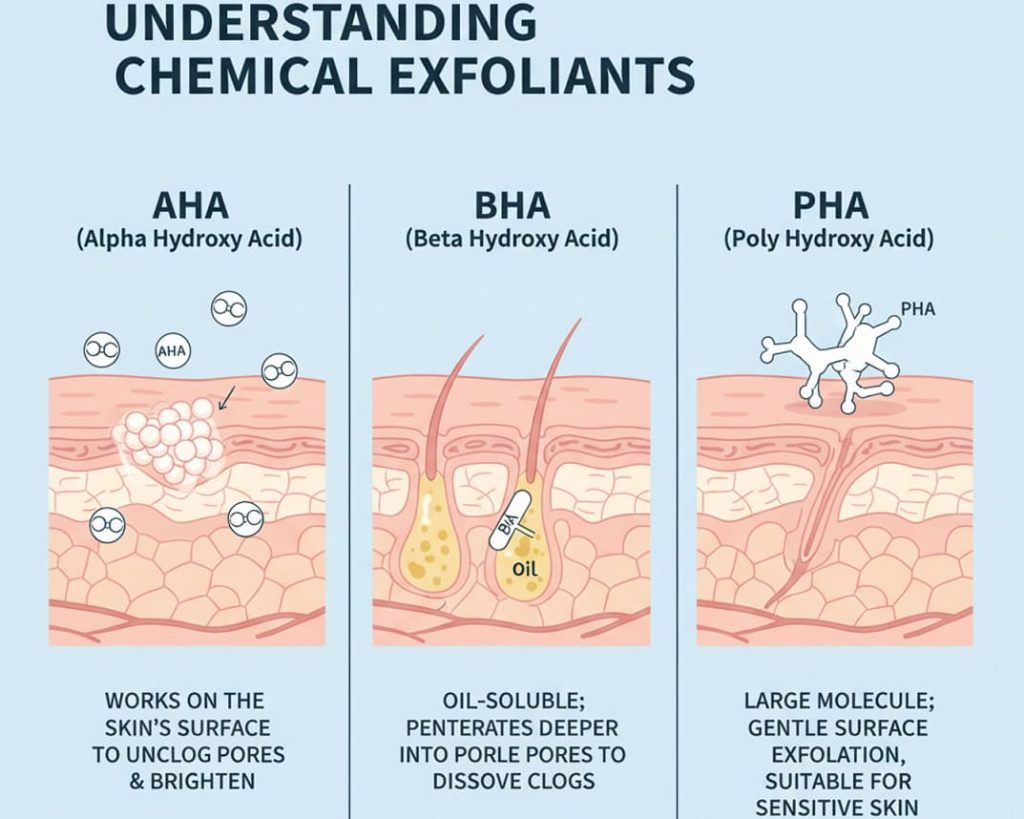
The Three Main Acid Families (Your New Best Friends):
1. AHAs (Alpha-Hydroxy Acids)
These are water-soluble and work on the surface of the skin. They are excellent for addressing surface-level concerns like dullness, sun damage, and fine lines.
- Glycolic Acid: The powerhouse. It has the smallest molecule, allowing it to penetrate deeply for significant textural improvement and collagen stimulation. Best for normal, combination, oily, and sun-damaged skin.
- Lactic Acid: The hydrating hero. It has a larger molecule, making it gentler than glycolic acid. It’s also a humectant, meaning it draws moisture into the skin. Perfect for dry, sensitive, and beginner acid users.
- Mandelic Acid: The gentle giant. It has the largest AHA molecule, so it penetrates very slowly and is extremely gentle. It also has antibacterial properties, making it great for sensitive, acne-prone skin, and darker skin tones due to a lower risk of post-inflammatory hyperpigmentation.
2. BHAs (Beta-Hydroxy Acids)
These are oil-soluble, which is their superpower. This allows them to penetrate through sebum and get deep inside the pores to clear them out from within.
- Salicylic Acid: The one and only BHA used in skincare. It is the gold standard for oily, congested, and acne-prone skin. It exfoliates inside the pore lining, dissolves clogs, and is also anti-inflammatory, which helps to calm breakouts.
3. PHAs (Poly-Hydroxy Acids)
These are the “next-generation” acids, considered the cousins of AHAs. They have a very large molecular structure, meaning they only exfoliate the very top surface of the skin without causing irritation.
- Gluconolactone & Lactobionic Acid: The gentle protectors. They are not only extremely gentle exfoliants but also act as humectants and antioxidants. They are the ideal choice for extremely sensitive skin, rosacea-prone skin, or for those who have damaged their skin barrier.
Part 4: How to Safely Incorporate Acids into Your Routine
- Start Low and Go Slow: Begin with a low-concentration product and use it only 1-2 times per week at night. As your skin builds tolerance over several weeks, you can gradually increase the frequency.
- Listen to Your Skin: A slight, temporary tingle can be normal. Stinging, burning, or lasting redness is a sign of irritation. If this happens, reduce the frequency of use.
- Product Formats:
- Toners: Easy to use, offer a light, all-over exfoliation.
- Serums: Deliver a more concentrated dose of the acid.
- At-Home Peels/Masks: Higher concentration products designed for weekly or bi-weekly use.
- Alternate Your Actives: Do not use a strong exfoliating acid on the same night as a retinoid, especially when you are just starting out. Alternate nights to avoid compromising your skin barrier.
- SPF is NON-NEGOTIABLE: Exfoliating makes your skin more vulnerable to sun damage (photosensitive). You must be diligent about applying a broad-spectrum sunscreen every single morning. This is the most important rule of using acids. We cover the best options in our Ultimate Guide to Face Sunscreens.
FAQ Section: Your Exfoliation Questions, Answered

- 1. Will chemical exfoliants burn or “peel” my skin like a professional peel?
- No. Over-the-counter exfoliating acids are formulated at a much lower concentration and pH than professional peels. When used correctly, they should not cause visible peeling. They work on a microscopic level to encourage natural shedding.
- 2. How do I know if I’m over-exfoliating?
- The signs of a compromised skin barrier are clear: your skin will look red, feel tight and sensitive, and may appear unusually shiny or “waxy.” It might also sting when you apply other products. If this happens, stop all exfoliants and focus on gentle, barrier-repairing ingredients for 1-2 weeks.
- 3. Can I use both physical and chemical exfoliants?
- It’s generally not recommended, especially on the same day, as it’s very easy to overdo it. If you must, you could use a very gentle physical exfoliant (like a konjac sponge) in the morning and a chemical exfoliant at night a few times a week, but most skin types will find this to be too much. Choose one method and stick with it.
- 4. What about exfoliating brushes like the Clarisonic?
- These are a form of physical exfoliation. While they can be effective, they can also be too aggressive for many skin types, leading to irritation and a damaged barrier with daily use. A gentle chemical exfoliant is often a safer and more effective choice.
- 5. Do enzymes count as chemical exfoliants?
- Yes! Enzymes, often derived from fruits like papaya (papain) and pineapple (bromelain), are another very gentle type of chemical exfoliant. They work by breaking down the keratin protein in dead skin cells and are an excellent option for very sensitive skin.
Conclusion: The Smart Path to Smooth Skin
While the immediate sensation of a physical scrub can be gratifying, the science is clear: for a truly effective, even, and safe exfoliation, chemical exfoliants are the superior choice for the vast majority of people. They offer a sophisticated and customizable approach, allowing you to choose the perfect acid for your specific skin concerns—from the powerhouse glycolic to the gentle PHA. By moving away from aggressive scrubbing and embracing the smart science of acids, you are not just achieving smoother, brighter skin in the short term; you are protecting and preserving the health of your skin barrier for years to come.

