


For years, the foundation world was ruled by a simple binary: you were either on Team Dewy or Team Matte. But as beauty evolves, so do the textures we crave. In 2026, the conversation has become far more nuanced, moving beyond basic finishes to embrace entire aesthetic philosophies. Enter the two reigning trends that have captivated the industry: Glass Skin and Cloud Skin.
These are not just new words for “shiny” and “shine-free.” Glass Skin is an ultra-radiant, translucent look born from a skincare-first ethos, while Cloud Skin is an ethereal, soft-focus matte that creates a dreamy, filtered effect. Choosing between them isn’t just about your skin type; it’s about the mood, the moment, and the story you want your makeup to tell.
So, how do you navigate these sophisticated new trends? Which one will flatter your features and suit your lifestyle? This guide will break down the DNA of both Glass Skin and Cloud Skin, providing step-by-step tutorials and a head-to-head comparison to help you discover which of these beautiful finishes is your perfect match.
Part 1: The Rise of the Micro-Trend – Beyond a Simple Finish
Before we dive in, it’s important to understand that both Glass Skin and Cloud Skin are more than just foundations; they are total-face approaches. They consider the interplay of skin prep, primer, foundation, and finishing powders to create a cohesive textural story. This is a level of artistry that, as we explored in our foundational Dewy vs. Matte Guide, builds upon those core concepts to create something new and exciting.
Part 2: The Anatomy of Glass Skin
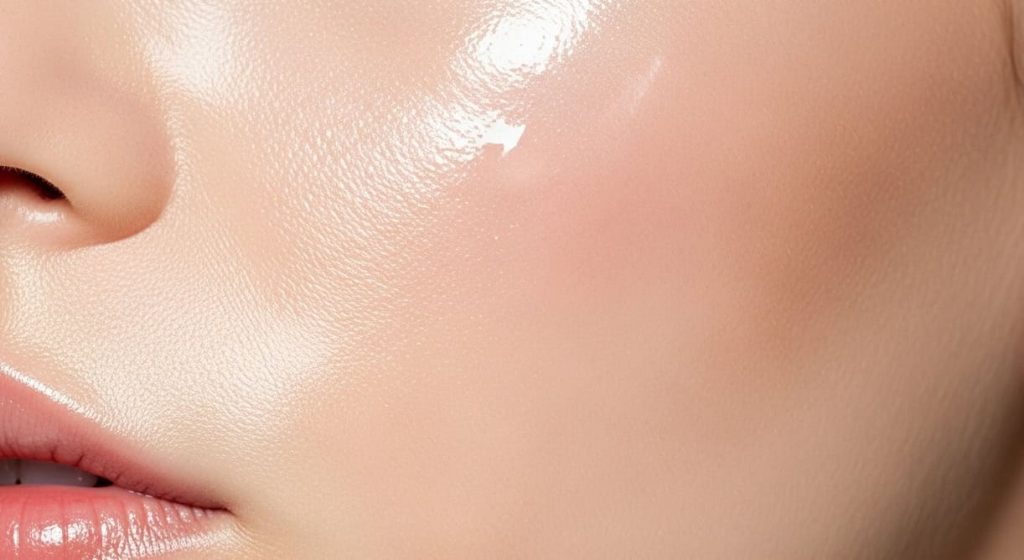
Originating from the meticulous multi-step routines of Korean Beauty, Glass Skin is the pinnacle of the dewy aesthetic. It’s about achieving a complexion so luminous and clear that it appears poreless, translucent, and reflective, like a pane of glass.
The Philosophy Behind the Glow
The core principle of Glass Skin is that the glow should come from within. It’s a skincare-forward approach where makeup is used to enhance, not cover. The goal is to create the illusion of perfectly healthy, hydrated, and plump skin.
Who is Glass Skin For?
- Dry to Normal Skin: This trend is a dream for skin types that crave moisture and radiance.
- Smooth Skin Texture: Because of its highly reflective nature, Glass Skin can accentuate bumps and texture. It looks best on a relatively smooth canvas.
- Minimal Coverage Fans: The look prioritizes translucency, so it’s ideal for those who are comfortable with a sheer, skin-baring finish.
Step-by-Step: How to Achieve the Glass Skin Look
- Intensive Hydration Prep: This is the most crucial stage. True Glass Skin begins with skincare.
- Start with a gentle cleanse, followed by layers of hydration. Apply a watery hydrating toner, pressing it into the skin. Follow with a moisture-binding essence or serum (Hyaluronic Acid is perfect here).
- Finish your prep with a rich, glow-enhancing moisturizer. This multi-layered approach, as detailed in our Skin Prep Guide, creates a plump, juicy base.
- The Luminous Primer: Choose a primer that is specifically formulated for radiance. Look for words like “illuminating,” “glowing,” or “luminous.” This provides the foundational layer of light reflection.
- The Foundation Choice: Opt for the sheerest, most hydrating formula you can find. Cushion foundations, serum foundations, or skin tints are ideal. The goal is to even out tone, not mask the skin.
- Application is Key: Use a damp makeup sponge and apply the foundation with a pressing and bouncing motion. This keeps the layers thin and melds the product with your hydrated skin for a seamless, translucent finish.
- Liquid Luminosity: This is where the “glass” effect comes to life. Use a balmy, non-glittery liquid or gel highlighter. Apply it generously to the high points of the face: cheekbones, bridge of the nose, cupid’s bow, and even a light tap on the forehead and chin.
- Finishing Touches: Skip powder if you can. If you must control oil, use the tiniest amount of a very fine powder only on the sides of your nose and between your brows. Finish with a drenching mist of a dewy setting spray to melt everything together.
Part 3: The Anatomy of Cloud Skin
Popularized by makeup artists seeking an ethereal, dreamy alternative to harsh matte looks, Cloud Skin is a soft-focus, multi-dimensional matte. It’s about creating a diffused, hazy, and blurred effect, as if you’re looking at skin through a soft filter or a gentle mist.
The Philosophy Behind the Blur
Cloud Skin is makeup as an atmospheric effect. It controls shine and blurs imperfections while still allowing for soft dimension. It’s not flat or heavy; it’s airy, light, and romantic. The goal is to look perfected yet soft.
Who is Cloud Skin For?
- Oily to Combination Skin: This is the ideal candidate, as the technique is built around beautifully controlling oil and shine.
- Textured Skin: The blurring properties of Cloud Skin are phenomenal for minimizing the appearance of large pores, fine lines, and uneven texture.
- Fuller Coverage Fans: While the look is soft, it supports a medium-to-full coverage base, making it great for events or photography.
Step-by-Step: How to Achieve the Cloud Skin Look
- Balanced Prep: The goal is a hydrated but not overly greasy base. Use a gentle cleanser, a balancing serum (like Niacinamide), and a lightweight, oil-free moisturizer. Let it fully absorb.
- The Blurring Primer: This is essential. Choose a pore-filling or soft-focus primer. As we discussed in our Primer Guide, these silicone-based formulas create the initial layer of smoothness.
- The Foundation Choice: Select a soft-matte or natural-finish liquid foundation. Avoid anything that is overly drying or has a heavy, powdery dry-down.
- Application Technique: Apply your foundation with a brush for coverage, then press over it with a damp sponge to remove any excess product and ensure a seamless blend.
- The Powder Power: This is the signature step of the Cloud Skin technique. Take a generous amount of a very finely milled translucent loose setting powder on a powder puff. Tap off the excess, and then gently press and roll the puff all over the face. This sets the makeup and creates the initial blurred, airy matte finish.
- Bringing Back Dimension: Use a large, fluffy brush to sweep away any excess powder. Then, re-introduce color with soft-matte powder blushes and bronzers. The key is to use products with a satin or soft-matte finish, not anything with heavy shimmer. Finish with a mattifying or natural-finish setting spray.

Part 4: Head-to-Head: A Quick Comparison
| Feature | Glass Skin | Cloud Skin |
| Primary Finish | Extremely radiant, wet-look | Soft-focus, velvety matte |
| Light Interaction | Highly Reflective | Diffused & Absorbed |
| Core Philosophy | Skincare-first, enhanced natural skin | Makeup as a soft filter |
| Best Skin Type | Dry, Normal, Smooth | Oily, Combination, Textured |
| Coverage Level | Sheer to Light | Medium to Full |
| Key Products | Hydrating Essences, Liquid Highlighters | Blurring Primers, Loose Powder |
FAQ Section: Your Trend Questions, Answered

- 1. Isn’t Glass Skin just another name for being oily? Not at all. Oily skin is often the result of uncontrolled sebum production, which can look patchy and break down makeup. Glass Skin is a controlled, intentional glow created with hydrating, non-greasy products, placed strategically to look like health, not oil.
- 2. Will Cloud Skin make me look old or dry? It can if not done correctly. The key to modern Cloud Skin is avoiding heavy, powdery foundations and ensuring your skin is well-hydrated underneath. The use of a fine loose powder and a setting spray prevents the “cracked” or “cakey” look of older matte styles.
- 3. Do I need to buy all new products to try these trends? Not necessarily. You can adapt what you have. To achieve a Glass Skin effect, mix a liquid illuminator into your favorite foundation. For a Cloud Skin effect, focus on mastering the technique of applying loose powder with a powder puff over your current base.
- 4. Can I combine the trends? Absolutely! This is an advanced and beautiful technique. You can create a “Cloud Skin” base by powdering your T-zone and the perimeter of your face, then apply the “Glass Skin” technique by pressing a balm or liquid highlighter onto the high points of your cheeks. This gives you control and a targeted, radiant glow.
Conclusion: Beyond the Trend, a Personal Choice
Glass Skin and Cloud Skin are more than just fleeting trends; they represent the beautiful evolution of base makeup. They prove that you can achieve a finish that is both technically impressive and deeply personal. Whether you are drawn to the radiant, skincare-forward honesty of Glass Skin or the ethereal, soft-focus romance of Cloud Skin, the choice is yours. Use these techniques not as rigid rules, but as tools in your beauty arsenal to express your mood, flatter your unique features, and, most importantly, feel confident and beautiful in your own skin.

