


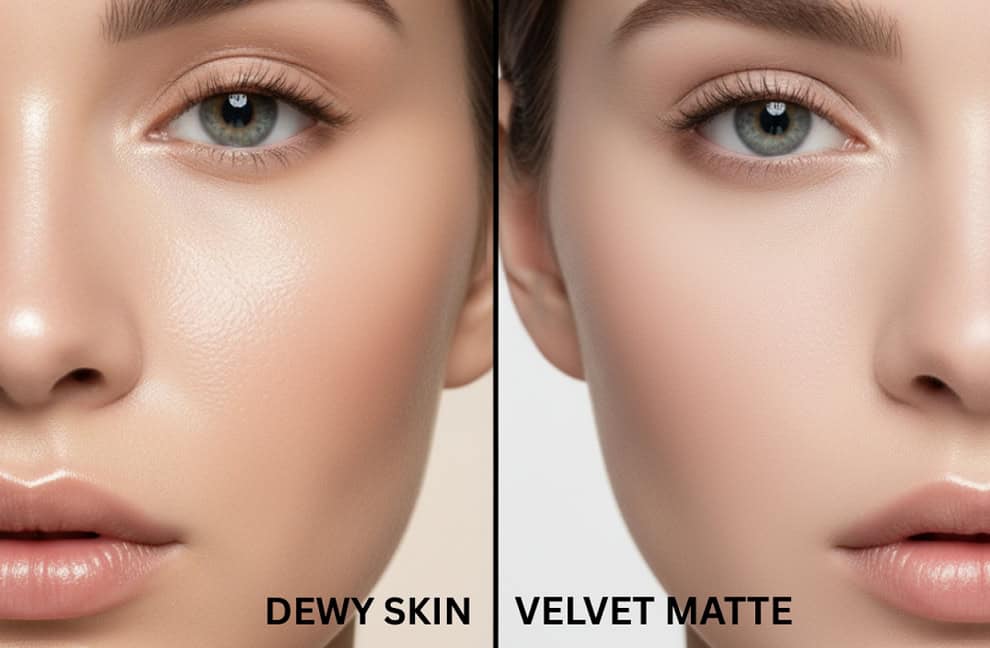
In the vast universe of foundation, the battle of the finishes rages on. On one side, you have the coveted “dewy” look—a radiant, luminous glow that mimics freshly misted, healthy skin. On the other, the timeless “matte” finish—a velvety, shine-free perfection that offers an airbrushed, soft-focus effect. Beauty trends may swing between these two extremes, but the question for the everyday consumer remains the same: which one is truly right for me?
Choosing the wrong finish can lead to a cascade of makeup frustrations. A dewy foundation on the wrong skin type can quickly devolve from “radiant” to “greasy.” A matte formula applied incorrectly can transform from “velvety” to “cakey and flat,” emphasizing every bit of texture.
This is not just a matter of preference; it’s a science of matching formula to skin type, climate, and occasion. In this definitive guide, we will dissect the DNA of dewy and matte finishes, exploring their pros, cons, ideal candidates, and the professional techniques required to perfect each look. Get ready to finally understand which finish will not only flatter your skin but elevate your entire makeup game.
Part 1: Defining the Finishes – What Do “Dewy” and “Matte” Actually Mean?
Before we can choose, we must understand the language. These terms describe how a foundation interacts with light and the resulting texture it imparts on the skin.
- Dewy Finish: A dewy finish is characterized by its high level of luminosity and light reflection. It aims to replicate the look of youthful, plump, and intensely hydrated skin. It feels moist to the touch and has a visible sheen or “glow.” The goal is not to be sparkle-free, but to look healthy and radiant.
- Matte Finish: A matte finish is the complete opposite. It absorbs light rather than reflecting it. The texture is velvety, smooth, and entirely free of shine. The goal is to create a soft-focus, perfected, and “airbrushed” appearance, minimizing the look of pores and controlling oil.

Part 2: The Deep Dive – The Case for a Dewy Finish
The dewy look has dominated beauty trends for its association with health and youthfulness. But is it right for you?
Who It’s For:
- Dry Skin: This is the ideal candidate. Dewy foundations provide much-needed moisture and luminosity, preventing the makeup from clinging to dry patches.
- Mature Skin: As skin ages, it naturally loses some of its luminosity. A dewy finish can restore a youthful glow and is less likely to settle into fine lines and wrinkles compared to heavy matte formulas.
- Normal Skin: Those with balanced skin can easily wear a dewy finish for a fresh, healthy look.
- Dull Skin: If your complexion looks tired or lackluster, a dewy foundation can instantly impart a look of vitality and health.
The Pros and Cons of a Dewy Finish
| Pros | Cons |
| Radiant & Youthful: Imparts a healthy, “lit-from-within” glow. | Can Emphasize Texture: The high shine can highlight bumps, acne, or large pores. |
| Hydrating: Formulas often contain moisturizing ingredients. | Low Longevity: Tends to have less staying power and can break down more easily. |
| Forgiving on Texture: Less likely to cling to dry flakes. | Can Look Greasy: A fine line between dewy and oily, especially on combination/oily skin. |
| Looks Natural: Mimics the appearance of real, healthy skin. | Prone to Transfer: Often feels tacky and can transfer onto clothing or phones. |
Key Ingredients in Dewy Foundations:
Look for humectants and emollients that boost moisture, such as Hyaluronic Acid, Glycerin, Squalane, and various botanical oils.
Pro Tips for Mastering the Dewy Look:
- Strategic Powdering: You don’t have to be shiny everywhere. After applying your dewy foundation, use a small, fluffy brush to apply a fine translucent powder only to the areas you want to control shine, like the T-zone.
- Mix-In Magic: Add a single drop of a liquid illuminator or a facial oil to your foundation before applying to amplify the glow.
Part 3: The Deep Dive – The Case for a Matte Finish
A matte finish is the go-to for a polished, long-wearing, and flawless look. It’s a powerhouse, but it requires the right canvas.
Who It’s For:
- Oily Skin: This is the perfect match. Matte foundations are formulated to control and absorb excess oil, keeping you shine-free for hours.
- Combination Skin: Excellent for controlling an oily T-zone.
- Acne-Prone Skin: A matte finish can help to blur the texture of blemishes without highlighting them with shine.
- Humid Climates: If you live somewhere hot and humid, a matte foundation will have far greater staying power.
The Pros and Cons of a Matte Finish
| Pros | Cons |
| Long-Wearing: The gold standard for longevity; holds up for hours. | Can Look Flat or Lifeless: If not applied correctly, it can remove all natural dimension. |
| Oil-Controlling: Absorbs excess sebum, keeping skin shine-free. | Can Emphasize Dryness: Will cling to and highlight every dry patch or flake. |
| Blurring/Soft-Focus: Minimizes the appearance of pores and texture. | Less Forgiving: Application mistakes are more noticeable and harder to correct. |
| No Transfer: Once it sets, it stays put with minimal transfer. | Can Feel Heavy: Formulas are often thicker and can feel less comfortable on the skin. |
Key Ingredients in Matte Foundations:
Look for oil-absorbing ingredients like Silica, Clay (Kaolin), Talc, or Polymers that create a soft-focus film.
Pro Tips for Mastering the Matte Look:
- Hydration is Key: The biggest mistake is applying a matte foundation to dehydrated skin. As detailed in our Guide to Prepping Skin for Makeup, proper hydration is essential to prevent a matte formula from looking cakey.
- Bring Back Dimension: After applying your matte foundation, use cream or liquid blush and highlighter before setting with powder to add a skin-like glow back into the face. You can also use a hydrating facial mist to “melt” the powders and remove any overly dry look.
Part 4: The Happy Medium – The Rise of the Satin/Natural Finish
Feeling like you don’t fit into either extreme? You’re not alone. The most popular finish for everyday wear is the Satin Finish, also known as Natural or Demi-Matte.
- What It Is: A satin finish is the perfect hybrid. It’s not shiny, but it’s not flat. It has a subtle luminosity that mimics the look of healthy, balanced skin. It offers the best of both worlds: the longevity is better than a dewy foundation, but the finish is more forgiving and skin-like than a true matte.
- Who It’s For: Literally everyone. It’s the most versatile and universally flattering finish, making it a safe and beautiful choice for all skin types and ages.
Part 5: The Technique Toolkit – How to Achieve Your Desired Finish
Your final look is not just about the foundation you buy; it’s about the entire system of products you use.
How to Build a Flawlessly Dewy Look:
- Prep: Use a hydrating cleanser, a hyaluronic acid serum, and a rich moisturizer.
- Prime: Choose an illuminating or hydrating primer.
- Apply: Use a damp makeup sponge to press the dewy foundation into the skin. This sheers it out and enhances the glow.
- Conceal & Sculpt: Use creamy, hydrating concealers and liquid or cream blush, bronzer, and highlighter.
- Set: Use a minimal amount of powder (or skip it entirely) and drench the skin with a dewy-finish setting spray.
How to Build a Velvety Matte Look:
- Prep: Use a gel cleanser, a niacinamide serum for oil control, and a lightweight, oil-free moisturizer.
- Prime: Choose a mattifying or pore-filling primer, focusing on the T-zone.
- Apply: Use a dense foundation brush to buff the matte foundation into the skin for maximum coverage and a smooth finish.
- Conceal & Sculpt: You can use cream products, but be sure to set them well. Powder contour and blush work beautifully with a matte base.
- Set: “Bake” the oiliest parts of your face with a translucent setting powder, then sweep away the excess. Finish with a matte-finish setting spray to lock everything in place for hours.
FAQ Section: Your Finish-Related Questions, Answered

- 1. I have oily skin, but I love the dewy look. Is it possible? Yes! The key is control. Use a full mattifying prep routine (primer, etc.), apply your foundation, and then strategically add the “dew” back in. Use a liquid or cream highlighter only on the very high points of the face (cheekbones, brow bone) and avoid placing it anywhere you get excessively oily.
- 2. Why does my matte foundation look cakey and dry, even if I moisturize? This could be a few things. First, you may need to exfoliate to remove dry, dead skin cells. Second, you might be applying too much product at once. Start with a thin layer and build up coverage only where needed. Finally, as we cover in our Ultimate Foundation Guide, the formula itself might just be too drying for your skin.
- 3. Can I make a matte foundation look dewy (or vice-versa)? You can certainly influence the finish. To make a matte foundation dewier, mix in a drop of liquid illuminator or squalane oil. To make a dewy foundation more matte, set it thoroughly with a good translucent powder and use a mattifying setting spray. However, you cannot completely change the inherent properties of the formula.
- 4. How does skin texture play into my choice of finish? This is a critical point. A dewy finish can accentuate bumpy texture (like acne or milia) because the shine draws attention to the raised areas. A matte finish can be excellent for blurring texture, but it will cling to and emphasize flaky texture (like healing blemishes or dry patches). Choose based on which type of texture you are dealing with more.
- 5. Does the occasion matter? Which finish is better for photos? Absolutely. Matte finishes are generally more photogenic for flash photography because they don’t cause flashback or create shiny hotspots on the face. A dewy finish can look beautiful in natural light and for events, but can translate to looking “oily” under harsh lighting or flash.
Conclusion: The Power is in Your Hands
The choice between a dewy and matte finish is no longer a rigid rule dictated by your skin type. It’s a creative choice empowered by knowledge. By understanding the properties of each finish and mastering the techniques to support them—from your initial skin prep to your final setting spray—you can achieve any look you desire. Whether you crave the radiant glow of a dewy goddess or the airbrushed perfection of a matte velvet canvas, the power to create a flawless, lasting, and beautiful finish is officially in your hands.

