


Scroll through any social media feed, walk down any beauty aisle, or read the ingredient list of any new “miracle” product, and you’re bound to see it: Niacinamide. In the fast-paced world of skincare, where ingredients rise and fall with the seasons, Niacinamide has achieved a rare and enduring rockstar status. It’s touted as the solution for everything from acne and oily skin to redness, wrinkles, and dark spots.
But with such a dizzying array of claims, a healthy dose of skepticism is natural. Can one single ingredient really do it all? Is it just another over-hyped trend, or is there real science to back up its reputation as the “Swiss Army knife” of skincare?
The answer is a resounding yes—the science is robust. This guide will serve as your definitive deep dive into the powerhouse that is Niacinamide. We will move beyond the marketing to explore what it is, how it works on a cellular level, and its five clinically-proven benefits to help you understand if this truly is the one ingredient your skincare routine is missing.
Part 1: The Science Explained – What Exactly Is Niacinamide?
Before we can appreciate its benefits, we must understand its identity.
Niacinamide (pronounced nahy-uh-sin-uh-mahyd) is a specific form, or “amide,” of Vitamin B3 (also known as niacin). Vitamin B3 is an essential nutrient that our bodies need for countless metabolic processes. You get it from foods like meat, fish, and grains. In skincare, Niacinamide is a water-soluble vitamin that offers a remarkable range of benefits when applied topically.
How It Works: The “Cell-Communicating” Powerhouse Unlike many ingredients that simply sit on the skin, Niacinamide is a cell-communicating ingredient. This means it can penetrate the skin and “talk” to your various skin cells, encouraging them to behave in a healthier, more youthful way.
At its core, Niacinamide is a precursor to two vital coenzymes in our skin cells: NAD+/NADH and NADP+/NADPH. Think of these coenzymes as the “batteries” that power your cells. They are fundamental to over 40 cellular processes, including:
- Energy Production: Giving your cells the energy to function properly.
- Cellular Repair: Helping to repair DNA damage from UV exposure.
- Maintaining Cellular Integrity: Ensuring your cells are strong and healthy.
By providing the building blocks for these cellular batteries, Niacinamide essentially helps your skin to help itself, which is why its benefits are so diverse and profound. It’s a core component of the “Treat” pillar we established in our Foundational Guide to Building a Skincare Routine.
Part 2: The Multi-Tasking Marvel – The 5 Clinically Proven Benefits of Niacinamide
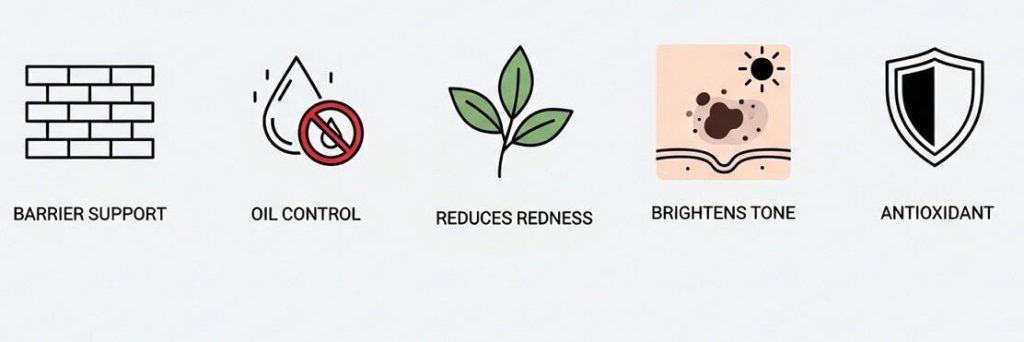
Niacinamide’s ability to influence cellular behavior translates into five major, clinically-proven benefits for the skin.
1. It Dramatically Strengthens Your Skin Barrier
This is arguably its most important benefit. Your skin barrier (the stratum corneum) is your first line of defense against environmental aggressors. Niacinamide has been shown to boost the production of ceramides, which are the natural lipids (fats) that hold your skin cells together like mortar between bricks.
- The Result: A stronger, healthier barrier that is better at retaining moisture and more resilient against irritation. This leads to less dryness, flakiness, and sensitivity.
2. It Regulates Oil Production & Visibly Minimizes Pores
For those with oily skin, this is a game-changer. While the exact mechanism is still being studied, Niacinamide has been shown to help normalize sebum (oil) production from the sebaceous glands.
- The Result: Less surface oiliness and shine. As a secondary benefit, when pores are no longer clogged and stretched by excess sebum, they appear smaller and more refined.
3. It Calms Redness & Reduces Inflammation
Niacinamide has powerful anti-inflammatory properties. It can help to calm the skin’s inflammatory response, which is the root cause of many skin issues.
- The Result: A visible reduction in the redness associated with conditions like acne, rosacea, and general skin sensitivity. It helps to create a calmer, more even-toned complexion.
4. It Tackles Hyperpigmentation & Brightens Skin Tone
Niacinamide is an effective brightening agent that works differently from others like Vitamin C. Instead of inhibiting the production of melanin (pigment), it works by interrupting the transfer of melanin from the pigment-producing cells (melanocytes) to the surface skin cells (keratinocytes).
- The Result: A reduction in the appearance of dark spots, sun spots, and post-inflammatory hyperpigmentation (the dark marks left behind after a pimple). Over time, this leads to a brighter, more even complexion.
5. It Provides Antioxidant Protection & Improves Fine Lines
While not as potent an antioxidant as Vitamin C, Niacinamide still helps to protect the skin from oxidative stress caused by free radicals. Furthermore, by boosting cellular energy and function, it supports healthy collagen production.
- The Result: Increased skin resilience against environmental damage and, over time, a visible improvement in the appearance of fine lines and wrinkles, contributing to a smoother skin texture.
Part 3: How to Integrate Niacinamide Into Your Routine
Niacinamide’s stability and gentle nature make it incredibly easy to incorporate.
- Product Format: The most popular and effective way to deliver Niacinamide is through a water-based serum, applied after cleansing/toning and before heavier creams. You will also find it in toners, moisturizers, and even sunscreens.
- What Concentration is Best? This is a key point of debate.
- 2-5%: This is the range where the vast majority of clinical studies have demonstrated Niacinamide’s effectiveness. This concentration is highly effective and very well-tolerated by almost all skin types.
- 10-20%: These higher concentrations have become very popular. While they may offer faster or more pronounced results for some (especially for stubborn oiliness), they also carry a higher risk of causing irritation, redness, or purging for others.
- The Verdict: Start with a 5% concentration. If your skin tolerates it well and you feel you need more power after finishing the bottle, you can then consider moving up to 10%.
- When to Apply: It can be used both in the morning (A.M.) and at night (P.M.). Its antioxidant and anti-inflammatory properties make it a great addition to your morning routine before sunscreen.
Part 4: The Ultimate Team Player – What to Pair with Niacinamide
One of Niacinamide’s greatest strengths is its compatibility. It plays well with almost every other active ingredient in skincare.
- Niacinamide + Hyaluronic Acid: A hydration powerhouse. Apply Hyaluronic Acid first to damp skin to draw in water, then Niacinamide on top to help lock it in by strengthening the barrier.
- Niacinamide + Retinoids: A myth-busting dream team. Old advice suggested they shouldn’t be mixed, but this has been thoroughly debunked. In fact, Niacinamide is the perfect partner for retinoids. It can help to mitigate the irritation and dryness often associated with retinol use by supporting the skin barrier.
- Niacinamide + Vitamin C: Another myth busted. The old concern was that they would react and cancel each other out or cause flushing. This was based on outdated studies using unstable forms of the ingredients. With modern, stable formulations, they can be used in the same routine without issue. Many people prefer to use Vitamin C in the A.M. (for its antioxidant synergy with SPF) and Niacinamide in the P.M., but using them together is perfectly safe.
- Niacinamide + Exfoliating Acids (AHAs/BHAs): A great combination. The anti-inflammatory properties of Niacinamide can help to soothe the skin and reduce potential irritation from the use of exfoliating acids. We explore these acids in detail in our Chemical vs. Physical Exfoliants guide.
FAQ Section: Your Niacinamide Questions, Answered

- 1. I tried a 10% Niacinamide serum and it made my skin red and irritated. Why?
- While Niacinamide itself is generally non-irritating, high concentrations can be too much for some skin types. The irritation could also be caused by another ingredient in that specific product’s formula. Try switching to a lower 5% concentration from a different brand.
- 2. Can Niacinamide cause “purging”?
- True purging (an initial increase in breakouts) is typically caused by ingredients that speed up cell turnover, like retinoids or exfoliating acids. Niacinamide does not work this way, so it is unlikely to cause a traditional purge. If you experience breakouts, it’s more likely to be a reaction to the specific product formulation.
- 3. How long does it take to see results?
- For improvements in hydration and reduced redness, you may notice a difference within 1-2 weeks. For oil regulation and pore appearance, give it at least 4-8 weeks of consistent use. For benefits related to hyperpigmentation, it can take 8-12 weeks or longer.
- 4. Is Niacinamide safe to use during pregnancy?
- Topical Niacinamide is generally considered safe for use during pregnancy and breastfeeding. However, it is always best practice to consult with your doctor or dermatologist before introducing any new active ingredient during this time.
Conclusion: The Universal Skin Support System
So, is Niacinamide the one ingredient everyone should be using? For the vast majority of people, the answer is a resounding yes. It’s not a harsh, single-issue treatment; it’s a foundational, supportive vitamin that helps your skin function at its absolute best. Whether your goal is to calm irritation, control oil, boost hydration, or brighten your complexion, Niacinamide offers a gentle, effective, and scientifically-backed path to achieving it. It is less of a fleeting trend and more of a permanent, indispensable pillar of intelligent skincare.

