


You stand in the makeup aisle, faced with a dizzying array of textures. On one side, sleek sticks and dewy pots of cream blush promise a natural, skin-like glow. On the other, elegant compacts of pressed powder contour offer an airbrushed, long-lasting finish. The choice seems simple, a mere matter of preference. But if you’ve ever applied a cream blush only to watch it disappear by noon, or blended a powder contour that turned into a muddy, patchy mess, you know the truth: the formula you choose is one of the most critical decisions in your makeup routine.
The debate between cream and powder is not about which is universally “better.” It’s about which is right for your skin type, your desired finish, and the specific occasion. Using the wrong formula can actively work against your other products, sabotage your skin’s appearance, and undo all the hard work you put into your base.
This guide will serve as your definitive texture showdown. We will dissect the composition of cream and powder formulas, reveal who they are truly for, and teach you the professional application techniques to master both. It’s time to stop guessing and start choosing the formula that will elevate your look from good to flawless.
Part 1: The Anatomy of a Formula – What’s the Real Difference?
At a chemical level, creams and powders are fundamentally different, which dictates how they behave on your skin.
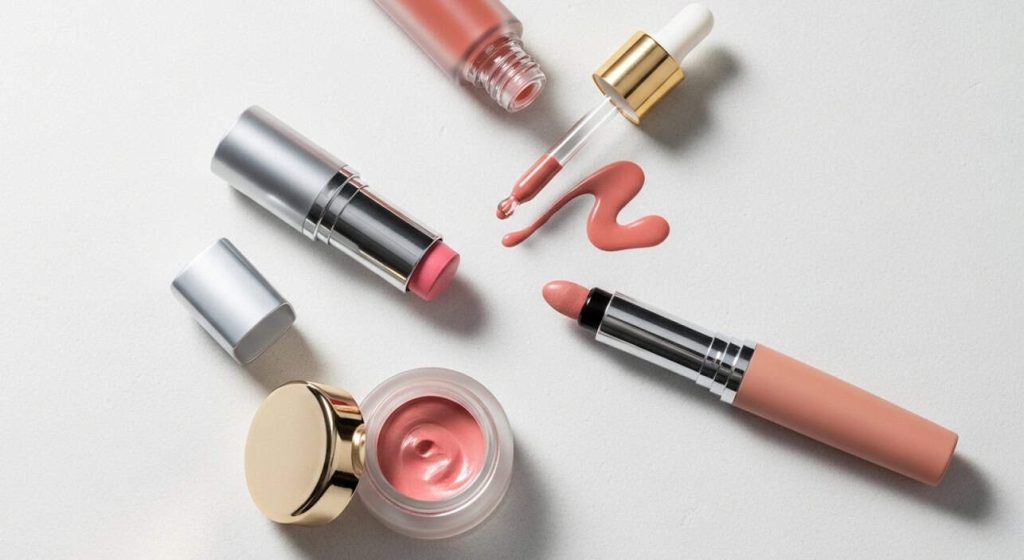
- Creams (Including Liquids, Gels, and Sticks): These are emollient-based products. Their formula consists of pigments suspended in a base of waxes, oils, and silicones.
- How They Behave: Because of their emollient nature, they don’t “dry down” in the same way powders do. Instead, they melt into the skin, fusing with your foundation to create a genuine skin-like finish. They reflect light, imparting a natural luminosity and dewiness.
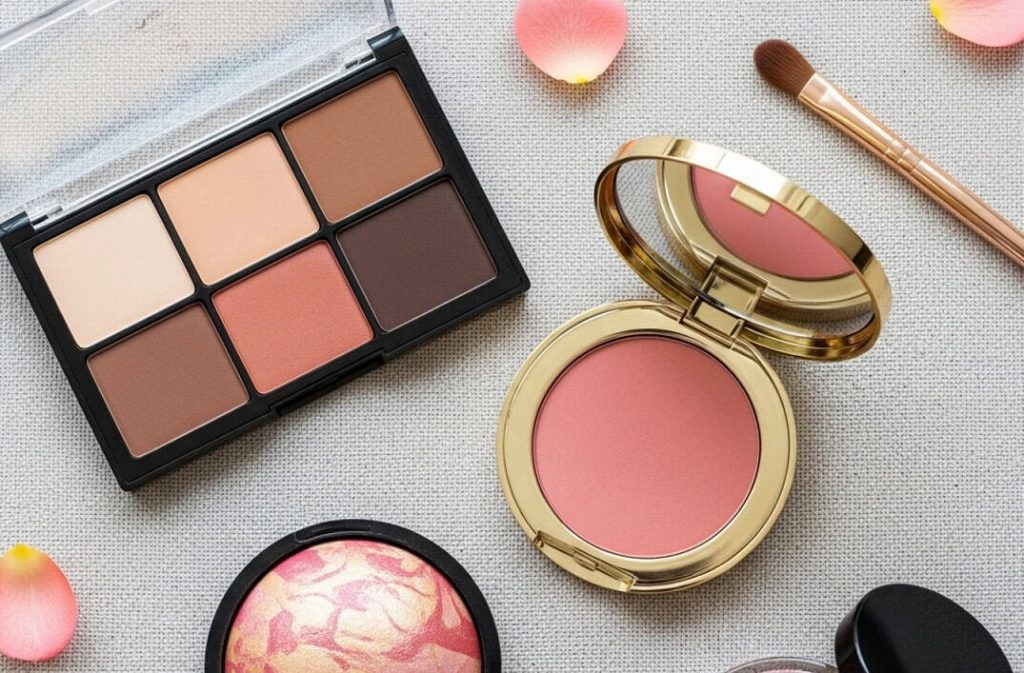
- Powders (Including Pressed, Loose, and Baked): These are pigment-based products. Their formula primarily consists of colored pigments (like iron oxides) mixed with absorbent minerals (like talc, silica, or mica) and binders that press them into a pan.
- How They Behave: Powders sit on top of the skin, forming a thin layer of color. Their mineral components absorb light and oil, which is why they create a soft-focus, velvety, or matte effect. They are excellent for setting liquid products and increasing longevity.
Understanding this core difference is the first step. One becomes part of the skin; the other sits on top of it.
Part 2: The Cream Camp – Mastering the Seamless, “Lit-from-Within” Glow
Cream products are the key to achieving the modern, dewy, and natural aesthetic. They are beloved by makeup artists for their ability to look completely undetectable.
Who Should Prioritize Cream Formulas?
- Dry and Mature Skin: This is the ideal candidate. Powders can cling to dry patches and settle into fine lines, emphasizing texture. Creams, with their hydrating properties, glide over these areas, adding a youthful plumpness and radiance.
- Fans of the “No-Makeup” Makeup Look: Creams are unparalleled in their ability to mimic a natural flush or a subtle shadow. When blended correctly, they are the secret to looking naturally sculpted and healthy.
- Those Aiming for a Dewy or “Glass Skin” Finish: Creams are essential for a luminous look. As we explored in our “Glass Skin vs. Cloud Skin” guide, a truly radiant finish is built with layers of hydrating, light-reflective products.
The Pros and Cons of Creams
| Pros | Cons |
| Skin-Like, Natural Finish: Melts into the skin for an undetectable look. | Lower Longevity: Can fade faster, especially on oily skin. |
| Hydrating & Luminous: Adds a youthful, dewy glow. | Can Disturb Foundation: Can lift base makeup if applied incorrectly. |
| Easy to Blend with Fingers: The warmth of your skin helps the product melt. | May Feel Tacky: Some formulas don’t fully “set” and can feel sticky. |
| Forgiving on Texture: Glides over fine lines and dry patches. | Less Beginner-Friendly: Can be easy to apply too much product at once. |
Professional Application Techniques for Creams
- The Golden Rule: Creams Before Powders. Never apply a cream product over a set, powdered face. This will cause the cream to grab onto the powder, resulting in a patchy, unblendable mess.
- Choose Your Tool:
- Fingers: Excellent for blush. Gently tap the product onto the apples of your cheeks. The warmth of your skin is the perfect tool for a natural melt.
- A Dense, Angled Brush: Ideal for cream contour. Use a stippling (tapping) motion to place the product, then gentle circular motions to blend.
- A Damp Makeup Sponge: Perfect for blending out harsh lines and creating a seamless, airbrushed effect for both blush and contour.
- The “Underpainting” Technique: For the most subtle, natural sculpt, apply your cream contour and blush before you apply your foundation. Then, apply a thin layer of foundation over top. The color will peek through as a soft, believable shadow and flush.
Part 3: The Powder Camp – The Key to an Airbrushed, Long-Lasting Finish
Powders are the reliable workhorses of the makeup world. They offer control, longevity, and a perfected finish that is ideal for many situations.
Who Should Prioritize Powder Formulas?
- Oily and Combination Skin: This is the perfect match. The absorbent properties of powder will help control shine throughout the day and will last significantly longer on skin that produces more oil.
- Makeup Beginners: Powders are generally more forgiving. It’s easier to build up the intensity slowly with a powder than it is to take away an overly-pigmented cream.
- Those Aiming for a Matte or “Cloud Skin” Look: A velvety, soft-focus finish is the signature of powder products. They are essential for creating that dreamy, airbrushed effect.
- Anyone in a Humid Climate or Needing Full-Day Wear: For events, photography, or long workdays, the setting power and durability of powders are unmatched.
The Pros and Cons of Powders
| Pros | Cons |
| Excellent Longevity: Stays put for hours and controls oil. | Can Look Dry or Cakey: May emphasize dryness if skin is not prepped well. |
| Easy to Control Intensity: Simple to build from a sheer wash to a bold pop. | Can Emphasize Texture: May settle into fine lines or cling to dry patches. |
| Creates a Soft-Focus Finish: Blurs pores and creates an airbrushed look. | Harder to Correct: Can look muddy if the wrong undertone is used or over-applied. |
| Widely Available & Beginner-Friendly: The classic, easy-to-use format. | Can Look “Flat”: May remove the natural dimension and glow of the skin if not used with a highlighter. |
Professional Application Techniques for Powders
- Set Your Base First: For the smoothest possible blend, apply powder blush and contour after you have set your liquid foundation with a thin layer of translucent setting powder. Powder blends best over other powder.
- The Right Brush is Crucial:
- For Blush: Use a medium-sized, fluffy, angled brush. This deposits color softly and blends it out seamlessly.
- For Contour: Use a smaller, more precise, angled brush that fits into the hollows of your cheeks.
- Tap Off the Excess: This is the most important step beginners miss. After swirling your brush in the powder, always tap the handle firmly against your wrist to knock off excess product. This prevents you from applying a heavy, blotchy patch of color.
- Placement and Blending: Start by placing the product further back on the face (near the hairline for contour, on the high point of the cheekbone for blush) and blend it forward and upward. This ensures the most intense color is at the perimeter of your face for a lifted, professional look.
Part 4: The Hybrid Method – The Pro Secret to 12-Hour Flawless Color
Why choose one when you can use both? The ultimate professional technique for bulletproof, multi-dimensional color is to layer creams and powders.
- The Philosophy: This method gives you the best of both worlds. The cream product provides a natural, dewy base and acts as a tacky layer for the powder to adhere to. The powder then sets the cream, intensifies the color, and provides the incredible longevity of a powder product.
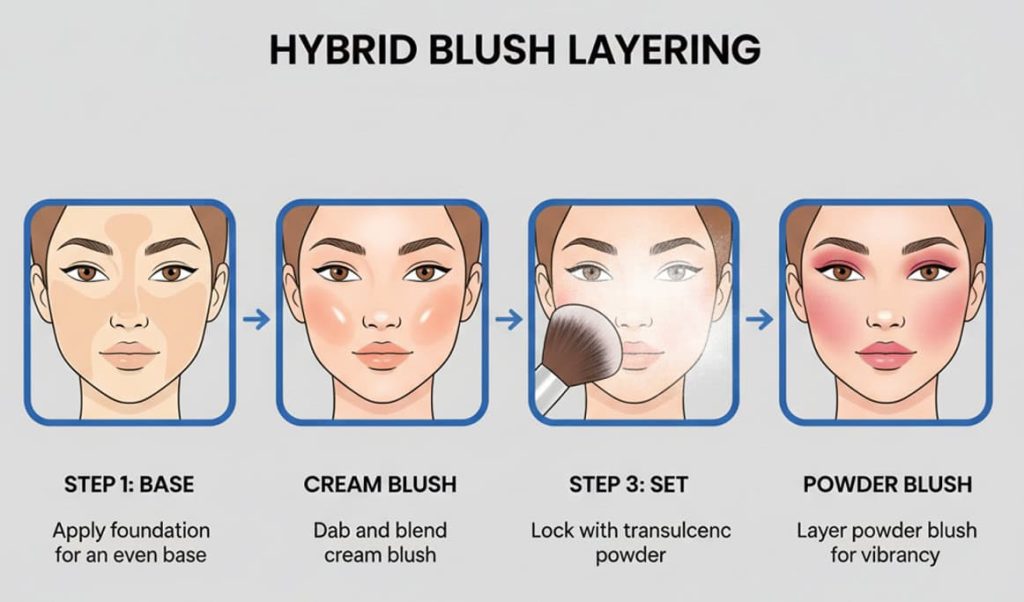
- The Step-by-Step Technique:
- Complete your liquid/cream base makeup (foundation, concealer).
- Apply your cream blush and/or contour and blend it out seamlessly.
- Take a very small amount of translucent setting powder on a puff or sponge and lightly set the cream product. You don’t want to mattify it completely, just take away the tackiness.
- Using a fluffy brush, apply a coordinating shade of powder blush/contour directly on top, using a light, sweeping motion.
- The result is a vibrant, truly long-lasting color that has the dimension of a cream with the staying power of a powder. This is the go-to technique for bridal, event, and film makeup.
Pro Tip: Lock in that truly flawless finish as part of your base routine — don’t let one careless step undo all the hard work you put into your base.
FAQ Section: Your Formula Questions, Answered

- 1. My cream blush always looks patchy when I blend it. What am I doing wrong? The most likely culprit is that you are applying it over a powdered surface. Ensure your face is not set with powder before you apply any cream products. Also, try a stippling or tapping motion rather than a rubbing one, as rubbing can lift the foundation underneath.
- 2. My powder contour looks muddy or dirty. How can I fix this? This is usually an undertone issue. Your contour shade should be cool-toned to mimic a natural shadow, not warm and orangey like a bronzer. Also, ensure you are applying it over a lightly set base, as applying powder directly onto a wet foundation can cause it to grab and look blotchy.
- 3. Can I use my lipstick as a cream blush in a pinch? Yes, you absolutely can! It’s a classic makeup artist trick. However, be cautious with very long-wearing matte liquid lipsticks, as they can be drying and hard to blend. A traditional satin or cream lipstick is a much better and safer option. As always, patch test if you have sensitive skin.
- 4. How do I keep my cream blush from fading so quickly? The hybrid method described above is the ultimate solution. Layering a similar shade of powder blush on top will lock it in place for hours. Alternatively, using a gripping primer underneath and a good setting spray on top can also significantly extend its wear time.
- 5. Do I really need different brushes for creams and powders? It’s highly recommended. Creams work best with densely packed, synthetic brushes because they don’t absorb the emollient product. Powders work best with fluffier brushes, often made of natural hair, because they pick up and diffuse the loose pigment more softly and evenly.
Conclusion: Choose Your Texture, Master Your Look
The choice between cream and powder is not a permanent allegiance to a single team. It is a strategic decision you can make each day based on what your skin needs and the look you want to achieve. Do you crave a natural, dewy glow for a casual brunch? Reach for a cream. Do you need a bulletproof, airbrushed finish for an important event? Master your powder application. And for the best of both worlds? Embrace the professional hybrid technique. By understanding these formulas from the inside out, you are no longer just applying makeup; you are making informed, artistic choices to create a truly flawless and personalized look.

