


You wash your face every night, but is it truly clean? If you’ve ever wiped your face with a towel only to see a stubborn beige smudge of foundation, or woken up with dull skin and clogged pores despite a diligent routine, the answer is likely no. The culprit isn’t your effort; it’s your technique. A single pass with a traditional cleanser is often no match for the tenacious layers of sunscreen, long-wear makeup, and daily pollution that accumulate on our skin.
Enter the double cleansing method. Born from the meticulous skincare rituals of Japan and South Korea, this two-step process is not a fleeting trend—it is a foundational technique that will fundamentally change the health and appearance of your skin. It is the secret to a truly, deeply clean canvas that is perfectly prepped to absorb the rest of your skincare.
But isn’t it too harsh? Is it only for heavy makeup wearers? This guide will debunk the myths and provide a definitive masterclass on the double cleanse. We’ll explore the science of why it works, how to choose the right products for your skin type, and the step-by-step method to unlock your clearest, most radiant complexion yet.
Part 1: The Science of “Clean” – Why One Cleanse Isn’t Enough
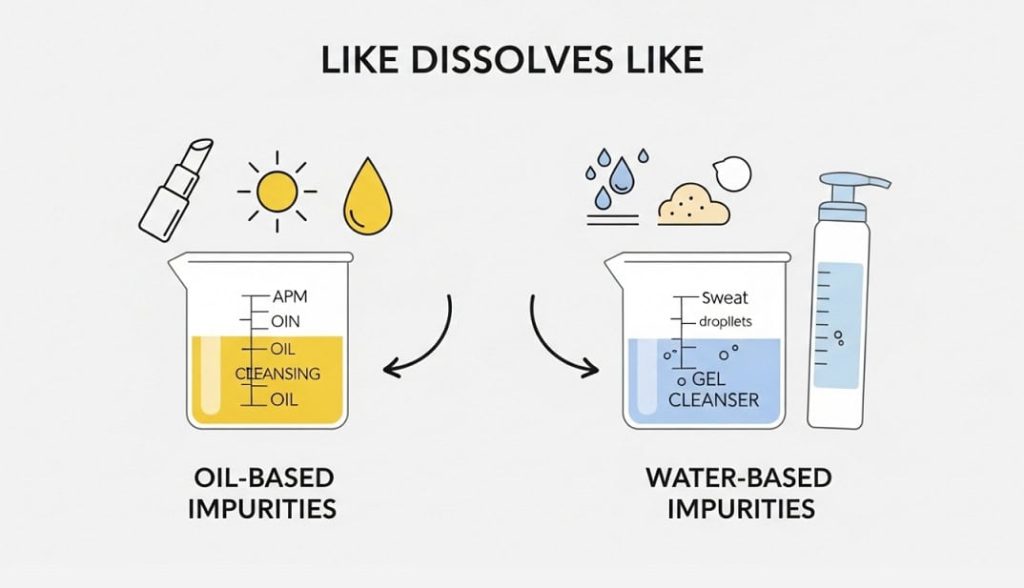
To understand why double cleansing is so effective, you need to remember a basic chemistry principle: “like dissolves like.” This means that oil-based substances are best at dissolving other oil-based substances, and water-based substances are best at dissolving other water-based substances.
Your skin accumulates two different types of impurities throughout the day:
- Oil-Based Impurities: This includes your makeup (most of which is formulated with oils and silicones), your sunscreen (which is designed to be water-resistant), excess sebum (the natural oil your skin produces), and pollutants from the air.
- Water-Based Impurities: This includes dirt, sweat, and grime.
A traditional, water-based foaming or gel cleanser is excellent at removing water-based impurities, but it struggles to effectively break down the stubborn, oily layer of SPF and makeup. It’s like trying to wash a greasy pan with just water. The double cleansing method tackles both types of impurities separately and efficiently. It’s the powerful cleansing engine behind the ‘Repair & Renewal’ phase we outlined in our Foundational Guide to Building a Skincare Routine.
Part 2: Deconstructing the First Cleanse – The Oil-Based Melt
The first cleanse is the heavy-lifter. Its sole purpose is to dissolve and lift away that stubborn layer of oil-based debris from the surface of your skin without stripping it.
How to Choose Your First Cleanser:
- Cleansing Oils: This is the classic choice. These are liquid oils formulated with surfactants, which allow them to emulsify (turn milky) and rinse clean with water. They are lightweight and effective for all skin types.
- Cleansing Balms: These are solid-to-oil formulas that come in a jar. They have a rich, buttery texture that provides a luxurious cleansing experience and can be less messy than liquid oils. They are particularly wonderful for dry and mature skin but are suitable for all.
- Micellar Water: While technically water-based, micellar water uses tiny oil molecules (micelles) suspended in soft water to attract and lift away makeup and impurities. It’s an excellent, gentle option for a first cleanse, especially for those with very sensitive skin or who wear light makeup.
Is it suitable for your skin type? YES.
- Oily & Acne-Prone Skin: It may seem counterintuitive, but a cleansing oil is your best friend. It effectively dissolves the excess sebum clogging your pores and the bacteria within it. Modern formulas are non-comedogenic and rinse away completely, leaving no greasy residue.
- Dry & Sensitive Skin: A nourishing cleansing balm or oil is far gentler than scrubbing your face with a foaming cleanser to remove makeup. It cleanses effectively while leaving your skin’s delicate moisture barrier intact.
Part 3: Deconstructing the Second Cleanse – The Water-Based Polish
After the first cleanse has melted away the surface layer, the second cleanse can now do its real job: cleaning your actual skin. Its purpose is to wash away any remaining oily residue from the first step and to purify the skin of water-based impurities like sweat and dirt.
How to Choose Your Second Cleanser:
- Gel Cleansers: These have a lightweight, jelly-like consistency and typically provide a light lather. They are excellent for a deep clean and are ideal for normal, combination, and oily skin types.
- Cream or Milk Cleansers: These are richer, non-foaming formulas that are very gentle and hydrating. They are the perfect choice for dry, mature, and sensitive skin.
- Foam Cleansers: These provide a rich, airy lather. While satisfying to use, be cautious. Many traditional foaming cleansers use harsh sulfates that can strip the skin. Look for modern formulas that use gentle, coconut-derived surfactants. Best for oily and resilient skin types.
The key is that your skin should feel clean, soft, and comfortable after your second cleanse—never tight, dry, or “squeaky.” That squeaky feeling is a sign that your skin’s protective barrier has been stripped.
[Image: An elegant flat lay showcasing the different product textures. It shows a pump of golden cleansing oil, a scoop of solid white cleansing balm, and a cotton pad soaked with micellar water on one side. On the other side, it shows a dollop of clear gel cleanser and a dollop of creamy white cleanser.]
Part 4: The Masterclass – Your Step-by-Step Double Cleansing Ritual
Technique is everything. Follow these steps precisely for a perfect cleanse every time.
- Start with Dry Hands and a Dry Face. This is the most critical step. Your oil-based cleanser needs to interact directly with the oils on your face to be effective. Water will get in the way.
- Apply Your First Cleanser. Dispense a generous amount (about a quarter-sized scoop of balm or 2-3 pumps of oil) into your dry palms.
- Massage Thoroughly (60 seconds). Gently massage the product all over your dry face in circular motions. Focus on areas with heavy makeup or congestion, like around your nose and on your forehead. Watch as your makeup literally melts away. This massage also boosts circulation for a healthy glow.
- Emulsify. This is the magic step. Wet your hands with a little bit of lukewarm water and continue to massage your face. The oil/balm will turn into a thin, milky liquid. This means the product is ready to be rinsed away cleanly.
- Rinse. Rinse your face thoroughly with lukewarm water until all the milky residue is gone.
- Apply Your Second Cleanser. Dispense a pea-sized amount of your water-based cleanser into your damp hands and lather it up.
- Massage Gently (60 seconds). Apply the lather to your now-damp face and massage gently. This cleanse is for your skin, not your makeup.
- Rinse and Pat Dry. Rinse your face completely and gently pat your skin dry with a soft, clean towel. Your skin is now perfectly clean and prepped for the rest of your routine.
Part 5: Busting the Double Cleansing Myths
- Myth #1: “It will clog my pores and cause breakouts.”
- Truth: This is the biggest fear for oily skin types, but it’s unfounded with modern formulas. The key is the emulsification step. The surfactants in the formula allow the oil to bind with water and rinse away completely, taking the dissolved sebum and bacteria with it. A non-emulsifying, pure oil (like raw coconut oil) can clog pores, which is why a properly formulated cleansing oil or balm is essential.
- Myth #2: “It’s only for people who wear heavy makeup.”
- Truth: Even if you don’t wear makeup, you should be wearing sunscreen every day. Sunscreen is specifically designed to be resistant to water and sweat, and a first cleanse is the most effective way to break it down. It also helps to manage natural oil production and remove environmental pollutants.
- Myth #3: “It will strip my dry skin and make it even drier.”
- Truth: The opposite is true. By using a nourishing, gentle first cleanse to do the heavy lifting, you don’t have to rely on a harsh, stripping second cleanser to remove your makeup. This two-step process is far gentler on the skin’s moisture barrier than trying to scrub everything off with a single, aggressive wash.
FAQ Section: Your Double Cleansing Questions, Answered

- 1. Do I need to double cleanse in the morning?
- Generally, no. Your skin doesn’t accumulate makeup or sunscreen overnight. A single, gentle cleanse with your water-based cleanser is typically sufficient in the morning.
- 2. On days I don’t wear makeup or sunscreen, should I still double cleanse?
- It’s not strictly necessary, but it can still be beneficial, especially if you have oily or congested skin. The first cleanse will help break down the sebum that has built up throughout the day.
- 3. Can I just use any oil, like coconut or olive oil, for my first cleanse?
- It is not recommended. Kitchen oils are not formulated with the necessary emulsifiers, meaning they will not rinse cleanly with water. They can leave a heavy, greasy film on the skin that can lead to clogged pores and breakouts. Always use a product designed for facial cleansing.
- 4. How do I remove waterproof mascara with this method?
- A good cleansing oil or balm should melt away even stubborn waterproof mascara. Spend a few extra seconds gently massaging the product over your closed eyes (without pulling or tugging) before you emulsify and rinse.
Conclusion: The Foundation of Healthy Skin
Double cleansing is more than just a method; it’s a mindset. It’s an acknowledgment that proper cleansing is not a step to be rushed, but the foundational act of self-care upon which your entire routine is built. By efficiently removing the daily barrier of impurities, you are not only preventing breakouts and dullness, but you are also paving the way for your expensive serums and moisturizers to penetrate more effectively and deliver the results you paid for. It is, without a doubt, the single most impactful change you can make to your skincare ritual.

