


You’ve invested in the perfect foundation, the creaseless concealer, and mastered your blending technique. Your makeup looks flawless as you walk out the door. But by lunchtime, a familiar disappointment sets in: your T-zone has become an oil slick, your foundation has settled into fine lines, and the smooth canvas you started with now looks patchy and worn. What went wrong?
The problem, in over 90% of cases, isn’t your makeup—it’s the crucial, often-rushed steps that happen before you even pick up a brush.
This guide is not just about slapping on a moisturizer. This is about understanding the science of your skin and creating a perfectGly balanced, hydrated, and smooth canvas that grips onto makeup and keeps it looking freshly applied all day long. Forget everything you thought you knew; we are diving deep into the professional techniques that will fundamentally change your makeup game, ensuring a flawless look from your morning coffee to your evening wind-down.
The Science of a Flawless Canvas: Why Prep is Paramount
To understand why prep is so crucial, you need to understand your skin’s surface. Your skin is protected by a delicate, slightly acidic barrier called the acid mantle. This barrier, part of the larger skin barrier (or stratum corneum), is a finely tuned ecosystem of lipids, sweat, and sebum responsible for two critical functions: keeping moisture in and keeping irritants out. When this barrier is compromised—either too oily, too dry, or stripped by harsh products—it creates an unstable surface for makeup.
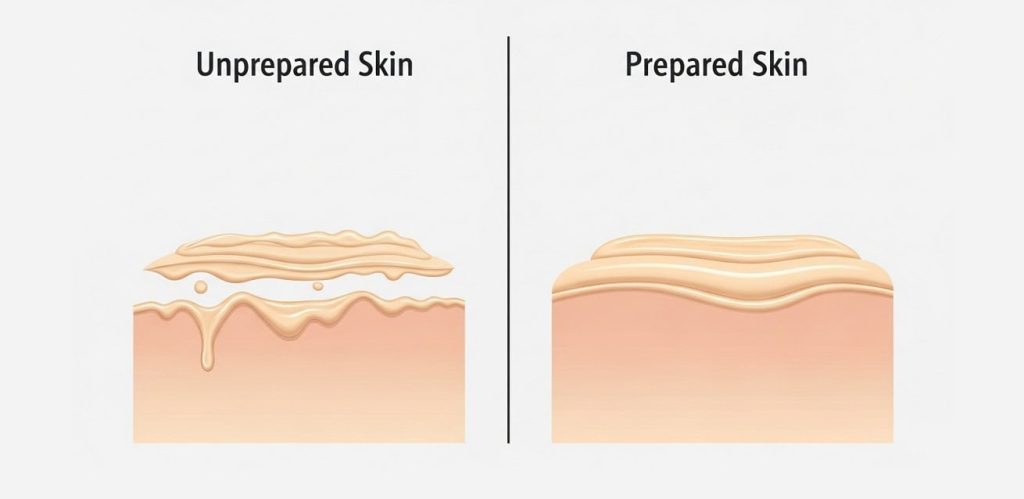
- An Unprepared (Unbalanced) Canvas: Makeup applied to this surface will inevitably fail. If the skin is dehydrated and the barrier is impaired, it will desperately try to absorb the moisture from your liquid foundation, leaving behind a cakey, uneven layer of pigment that clings to dry patches. Conversely, if the skin is overproducing oil to compensate for dehydration, this excess sebum will break down the emulsifiers in your makeup, causing it to separate, slide off, and look greasy.
- A Prepared (Balanced) Canvas: A properly prepped canvas has a balanced pH (around 5.5), is plump with hydration, and has a smooth, refined texture. This creates the optimal surface for makeup to adhere to, blend seamlessly upon, and last for hours without shifting.
As we established in our Ultimate Guide to a Flawless Foundation Base, preparation isn’t just a step; it’s the entire foundation of your look.
The 5 Core Steps to a Professional-Grade Prep Routine
This is the foundational framework. We will break down not just what to do, but why you’re doing it and how to choose the right products for each step.
Step 1: The Cleanse – Creating a Blank Slate
Cleansing removes dirt, oil, and nighttime skincare residue. Starting with a clean surface is non-negotiable as this debris can create a barrier preventing product absorption and causing a textured finish. For makeup wearers, the Double Cleansing Method in the evening is life-changing, but a single, effective cleanse in the morning is key.
Choosing Your Morning Cleanser:
- Gel Cleansers: Formulated to be lightweight and effective at dissolving oils. Ideal for normal, combination, and oily skin. Look for gentle surfactants like Coco-Glucoside instead of harsh sulfates.
- Cream/Milk Cleansers: These have a higher lipid content and cleanse without stripping natural oils. Perfect for dry, sensitive, or mature skin. They leave the skin feeling soft and nourished.
- Micellar Water: A great option for a very gentle, quick cleanse, especially for sensitive skin or on days when your skin feels balanced. It uses tiny oil molecules (micelles) to lift away impurities without disrupting the skin barrier.
Pro Tip: Avoid cleansers with high levels of harsh sulfates (like Sodium Lauryl Sulfate) which can strip the acid mantle, leading to either extreme dryness or a rebound in oil production. Your skin should feel clean and comfortable after washing, never “squeaky” or tight.
Step 2: Exfoliate – The Ultimate Smoothing Secret (1-3x a Week)
This is the most impactful step for eliminating texture and patchiness. Exfoliation removes the layer of dead skin cells (corneocytes) that causes makeup to look dull, cakey, and uneven.
Understanding Chemical Exfoliants (The Pro’s Choice):
- AHAs (Alpha-Hydroxy Acids): Water-soluble acids that work on the skin’s surface to dissolve the “glue” holding dead cells together.
- Glycolic Acid: The smallest AHA molecule, it penetrates deeply for powerful texture and fine-line smoothing. Best for normal to oily, sun-damaged, or mature skin.
- Lactic Acid: A larger molecule, it’s gentler and also a humectant (draws in water), making it more hydrating. Excellent for dry and sensitive skin types.
- BHAs (Beta-Hydroxy Acids): Oil-soluble, meaning they can penetrate through oil and get inside pores to clear them out from within.
- Salicylic Acid: The gold standard for oily and acne-prone skin. It de-clogs pores, reduces oil, and has anti-inflammatory properties, creating a smoother, clearer base.
- PHAs (Poly-Hydroxy Acids): The gentle giant of the acid family. Their large molecular size means they exfoliate only the very surface without irritation, while also providing hydration and antioxidant benefits. Perfect for extremely sensitive or rosacea-prone skin.
The Danger of Over-Exfoliation: More is not better. Over-exfoliating damages your skin barrier, leading to a state of chronic inflammation, redness, sensitivity, and trans-epidermal water loss (TEWL). This will make your makeup look worse, not better. Stick to 1-3 times per week, and never introduce multiple new acids at once.

Step 3: Tone & Hydrate – Balancing and Drenching the Skin
Forget the harsh, alcohol-based astringent toners of the past. Today’s toners and essences are designed to provide a critical first layer of hydration and balance the skin’s pH after cleansing.
Think of your skin like a sponge. A dry sponge is hard and won’t absorb much, but a damp sponge soaks up everything. A toner dampens your “skin sponge,” allowing your subsequent serums and moisturizers to penetrate more effectively and work more efficiently. Look for ingredient lists packed with humectants like Glycerin, Hyaluronic Acid, and botanicals like Rosewater or Centella Asiatica.
Step 4: Treat – Targeting Concerns with Potent Serums
Serums are lightweight, concentrated treatments that deliver a potent dose of active ingredients to address specific skin concerns. Using the right serum can solve the root cause of your makeup problems.
Your Pre-Makeup Serum Cheat Sheet:
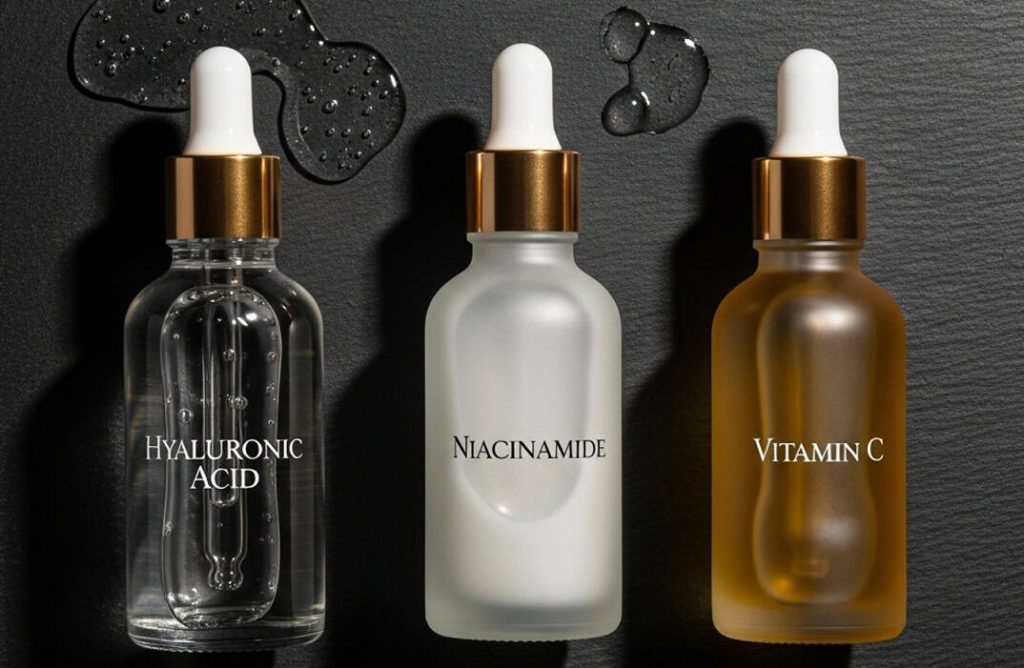
- If you struggle with DRYNESS & FINE LINES: A Hyaluronic Acid serum is your holy grail. It’s a humectant that can hold 1,000 times its weight in water, pulling moisture into the upper layers of the skin for a plump, bouncy effect that temporarily fills in dehydration lines.
- If you struggle with OILY SKIN & LARGE PORES: A Niacinamide (Vitamin B3) serum is a true powerhouse. It has been clinically shown to regulate sebum (oil) production, visibly refine the appearance of pores, and strengthen the skin barrier.
- If you struggle with DULLNESS: A Vitamin C serum (use a stable, gentle form like Sodium Ascorbyl Phosphate for daytime) provides antioxidant protection against environmental damage and imparts a radiant glow that shines through your foundation.
- If you struggle with REDNESS & SENSITIVITY: Look for serums with Azelaic Acid, Centella Asiatica (Cica), or Green Tea Polyphenols to calm inflammation and soothe the skin before makeup application, reducing the amount of color-correcting you need to do.
Step 5: Moisturize & Protect – The Final Seal
Moisturizer is the non-negotiable final step of prep. It has two main functions: to lock in the hydration from your serum and to smooth the skin’s surface with lipids (emollients), creating the final barrier between your skin and your makeup. After moisturizing, you must protect your skin with SPF.
Choosing Your Moisturizer Texture:
- Gel-Creams: Lightweight and water-based, often containing humectants but few oils. Perfect for oily and combination skin.
- Lotions: A classic texture that balances water and oil. Great for normal to combination skin.
- Creams: Richer and thicker, containing more lipids like ceramides, shea butter, and fatty acids. Essential for dry and mature skin to provide lasting comfort and a dewy base.
The SPF Imperative: Sunscreen is the most important skincare step of all for long-term skin health.
- Chemical Sunscreens: Absorb UV rays and convert them to heat. Tend to be more lightweight and invisible under makeup.
- Mineral Sunscreens (Zinc Oxide, Titanium Dioxide): Sit on top of the skin and physically block UV rays. Can be better for sensitive skin but may leave a slight white cast if not formulated well.
- The Golden Rule for 2025: Modern “hybrid” sunscreens offer the best of both worlds—cosmetically elegant and highly protective. Your foundation’s SPF is never enough; you need to apply at least a nickel-sized amount (or the “two-finger” rule) to your face and neck for adequate protection.
The Golden Rules of Application & Absorption
How you apply your products is just as important as what you apply.
- Thinnest to Thickest: Always apply your products in order of viscosity, from the most watery to the thickest. Order: Toner/Essence -> Serum -> Eye Cream -> Moisturizer -> SPF.
- Pat, Don’t Rub: Gently patting products into your skin encourages absorption without causing friction or irritation, especially on sensitive skin.
- The 5-Minute Wait: This is the ultimate pro secret. After applying your final skincare step (SPF), wait a full 5-10 minutes before applying primer. This allows everything to absorb and form a stable film on the skin. Rushing this step is the #1 cause of makeup pilling.
Advanced & Situational Prep: Taking It to the Next Level
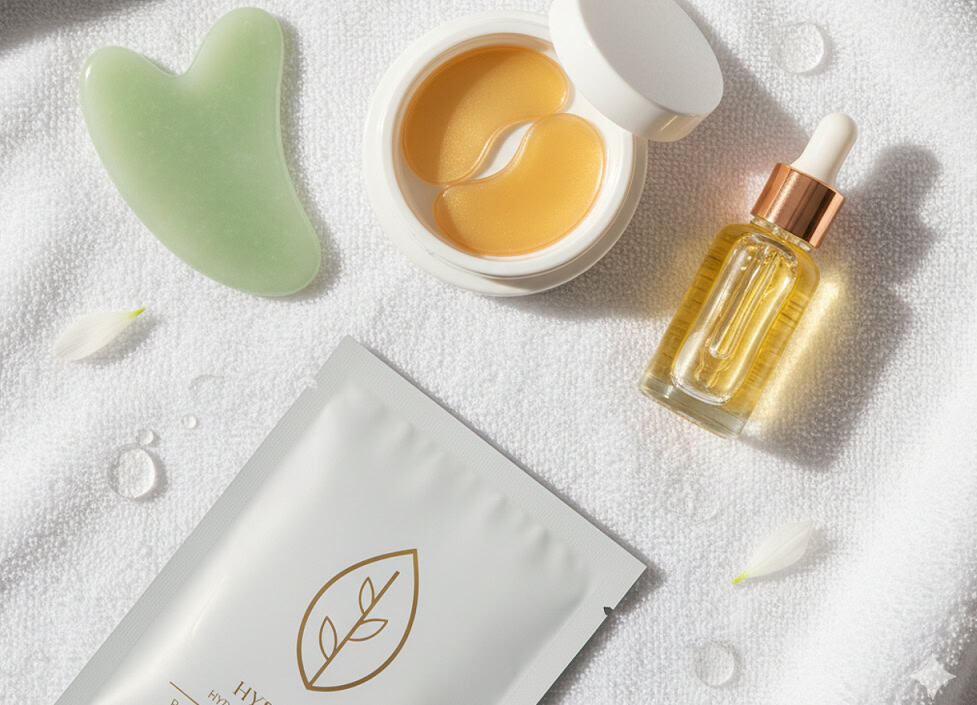
- Prepping for a Big Event/Photography: 15-20 minutes before your routine, use a hydrating sheet mask rich in glycerin and niacinamide. Follow with a quick facial massage using a jade roller or Gua Sha tool to de-puff and boost circulation for a natural glow.
- Prepping for Extreme Humidity: Focus on oil control and lightweight layers. Use a BHA-based toner, a niacinamide serum, and a lightweight gel moisturizer. Consider a mattifying primer just in your T-zone.
- Prepping for Extreme Cold/Dryness: “Skin flooding” is your friend. Layer your hydration: apply a hydrating toner on damp skin, followed immediately by a hyaluronic acid serum, a ceramide-rich moisturizer, and even a few drops of a non-greasy facial oil (like squalane) pressed on top.
FAQ Section: Your Skin Prep Questions, Answered

- 1. Why is my makeup pilling into little balls? This is usually caused by A) not waiting long enough between layers, B) using too much of a silicone-heavy product, or C) mixing incompatible water-based and silicone-based products. Solution: Wait longer between steps, use less product (a pea-sized amount is usually enough), and check your ingredient lists. If your primer is high in silicones (like dimethicone), it will likely work best with a silicone-based foundation.
- 2. Why does my skin look so oily after just a few hours? This is a classic sign of dehydrated skin. When stripped of moisture (often by harsh cleansers or a lack of hydration), your skin’s sebaceous glands go into overdrive to produce more oil to protect themselves. Solution: Stop using harsh, stripping cleansers. Incorporate a hydrating serum (like Hyaluronic Acid) before your lightweight, oil-free moisturizer to give your skin the water it’s craving.
- 3. Can I skip moisturizer if I have oily skin? Absolutely not. See above. Skipping moisturizer will likely make you oilier. The key is to choose the right kind of moisturizer. Opt for a lightweight, oil-free gel or gel-cream formula that provides hydration without adding heavy oils to your skin.
- 4. Do I really need a separate eye cream before makeup? For many, yes. The skin around the eyes is thinner and more delicate, with fewer oil glands. Eye creams are specifically formulated to be less irritating and to target concerns like fine lines and dryness, which are major causes of concealer creasing. Applying a lightweight, hydrating eye cream can create a smoother canvas for your concealer.
- 5. What’s the correct final order: Moisturizer, SPF, then Primer? This is the #1 point of confusion. The correct order is always: Moisturizer -> SPF -> Primer. Skincare (moisturizer) comes first to treat the skin. SPF is the second-to-last step as it needs to form an even, protective film over your skin. Primer is the final step before makeup, as its job is to create a barrier between your skincare and your foundation.
Conclusion: Your Best Makeup Starts with Your Best Skin
Proper skin preparation is the most profound shift you can make in your beauty routine. It transforms makeup application from a daily battle against texture and oil into a seamless, enjoyable process. By taking these strategic minutes to cleanse, balance, hydrate, and protect, you are not just guaranteeing a flawless, long-lasting makeup look—you are investing in the long-term health and vitality of your skin itself. Master these steps, and you will master your makeup.

