


You’ve mastered the art of blending, can ace a basic eyeliner, and feel confident with your mascara. But when it comes to choosing eyeshadow shades, do you still find yourself gravitating towards the same safe browns and neutrals, or feeling lost in a sea of colorful palettes? Many aspiring makeup artists default to colors they think look good, rather than understanding the science of what truly enhances their unique eye color.
The secret to making your eyes “pop” isn’t about using the brightest or most dramatic shades; it’s about understanding color theory. Just like a painter uses specific hues to make elements in their artwork stand out, you can leverage the color wheel to select eyeshadows that create a captivating contrast with your natural eye color, making them appear more vibrant and intense.
This guide will unlock the power of color theory for your eye makeup. We will move beyond generic advice to provide a clear, actionable framework for choosing the most flattering eyeshadows for blue, green, brown, and hazel eyes. Get ready to transform your eye makeup from “nice” to “wow!”
Part 1: The Magic of the Color Wheel – Your Eyeshadow Secret Weapon
At the heart of choosing flattering eyeshadows is the color wheel. This fundamental tool of artists and designers helps us understand color relationships.
- Complementary Colors: These are colors that sit directly opposite each other on the color wheel (e.g., blue and orange, green and red, purple and yellow). When placed next to each other, complementary colors create the strongest contrast, making each other appear more vibrant and intense. This is your number one secret weapon for making your eye color pop.
- Analogous Colors: These are colors that are next to each other on the color wheel (e.g., blue, blue-green, green). They create a harmonious, blended look rather than a strong pop.
- Neutral Colors: These are shades like browns, beiges, creams, blacks, and grays. They don’t appear on the color wheel, but they are essential for creating depth, dimension, and balance in any eye look, as we explored in our How to Do Eye Makeup: A Complete Guide for Beginners.

Part 2: Eyeshadows for Blue Eyes – Bring Out the Sapphire Sparkle
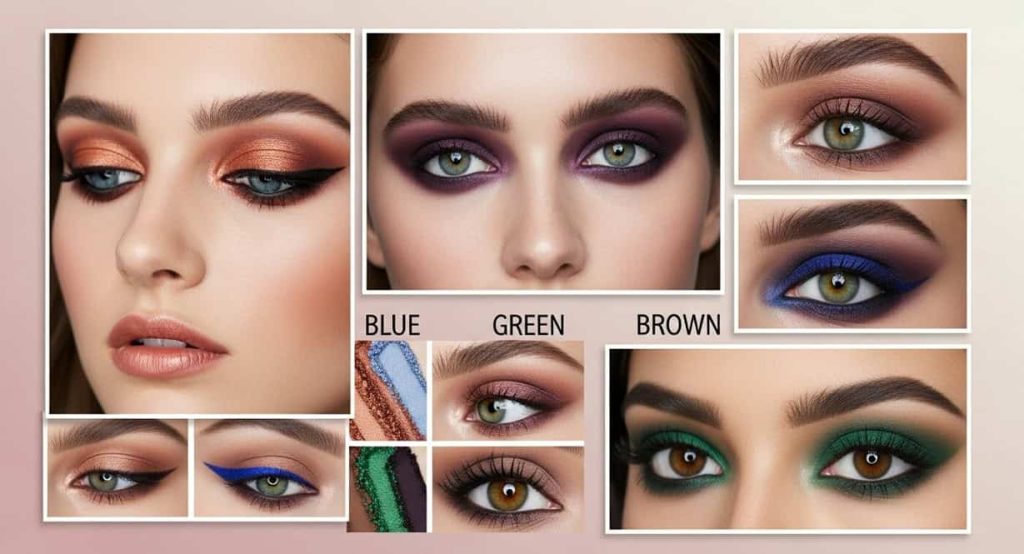
Blue eyes are cool-toned, ranging from icy pale blue to deep navy. To make them truly stand out, reach for warm-toned, earthy shades that sit opposite blue on the color wheel.
- The Go-To Complementary Shades (for the POP!):
- Oranges & Coppers: Think warm terracotta, burnt orange, rich copper, bronze, and peach. These warm tones will create the most striking contrast.
- Browns with Red/Orange Undertones: Rust, sienna, warm chocolate, and reddish-browns.
- Other Flattering Shades (for definition & harmony):
- Golds: Shimmering gold, champagne gold.
- Pinks & Purples: Soft rose, plum, lavender, and rich eggplant can enhance blue eyes.
- Neutrals: Taupes, warm beiges, soft creams.
- Liner: Brown or deep plum liner can be softer than black.
- Shades to Use with Caution (or for a monochrome look):
- Cool Blues: Using blue eyeshadow on blue eyes can create a beautiful monochrome look, but it won’t make your eyes “pop” in the same way. If you do, choose a blue that is a different depth or intensity than your natural eye color (e.g., a navy on a light blue eye).
- Pro Tip: For a truly impactful look, use a warm copper or bronze shimmer on the center of your lid, or line your lower lash line with a warm brown.
Part 3: Eyeshadows for Green & Hazel Eyes – Ignite the Emerald Fire
Green eyes are typically warm-toned, varying from forest green to olive. Hazel eyes are a mix, often with flecks of green, gold, and brown. For both, red and purple-toned shades are your secret weapon.
- The Go-To Complementary Shades (for the POP!):
- Red & Purple Tones: Rich purples (plum, violet, eggplant, amethyst), deep mauves, maroon, and cranberry shades. These are directly opposite green on the color wheel.
- Burgundy & Rust: These reddish-browns are particularly stunning.
- Other Flattering Shades (for definition & harmony):
- Earth Tones: Deep browns, warm taupes, moss green, olive green (especially for hazel).
- Golds & Bronzes: Shimmering gold, true bronze, and deep copper can enhance the golden flecks in hazel eyes.
- Pinks: Soft dusty rose or muted pinks.
- Liner: Deep brown, black, or even a deep plum liner.
- Shades to Use with Caution:
- Cool Blues/Silvers: These can sometimes make green or hazel eyes appear dull.
- Pro Tip: To truly amplify green eyes, use a purple liner on your upper lash line or a deep cranberry shimmer on your lid. For hazel eyes, play with different shades to bring out specific flecks – gold for golden flecks, plum for green flecks.
Part 4: Eyeshadows for Brown Eyes – The Ultimate Chameleon’s Palette
Brown eyes are incredibly versatile, ranging from light honey to deep espresso. Because brown is a neutral color, it allows you to wear almost any shade on the color wheel. However, certain shades will make them sparkle more than others.
- The Go-To Complementary Shades (for the POP!):
- Blues: Deep navy, sapphire, cobalt, and teal. Blue is opposite orange on the color wheel, and many brown eyes have warm, orange/yellow undertones.
- Greens: Emerald, forest green, olive, and jade can bring out any hidden golden flecks.
- Purples: Lavender, plum, amethyst, and deep violet. These will make brown eyes look richer.
- Other Flattering Shades (for definition & harmony):
- Bronzes & Golds: These are universally flattering and enhance the warmth in brown eyes.
- Earth Tones: All shades of brown, taupe, beige, and cream.
- Pinks & Peaches: Soft rose, dusty pink, and peach can brighten.
- Charcoal & Grays: For a smokier, cooler-toned look.
- Liner: Black, deep brown, or a colored liner in blue or green for a dramatic pop.
- Shades to Use with Caution: None! Brown eyes can truly pull off anything.
- Pro Tip: For a simple yet impactful look, try a shimmering gold on the inner half of the lid and a deep emerald green or sapphire blue on the outer V.
Part 5: Beyond the Main Eye Color – Considering Undertones & Skin Tone
While primary eye color is the main guide, other factors can refine your choices.
- Skin Undertone:
- Cool Undertones: (pink, red, blue in skin) can wear cooler eyeshadows (silvers, cool grays, true blues, purples) beautifully.
- Warm Undertones: (yellow, peach, golden in skin) tend to shine with warmer eyeshadows (golds, bronzes, coppers, warm browns, olives).
- Neutral Undertones: Can wear a wide range of both warm and cool shades.
- Hair Color: Think about how your hair color affects your overall “canvas.” Redheads often look incredible in greens and bronzes, while blondes can carry off softer pastels.
- The “Pop” vs. “Complement” Distinction: Remember the goal. If you want your eyes to look more vibrant (pop), use complementary colors. If you want to create a cohesive mood or blend (complement), use analogous colors or neutrals.
FAQ Section: Your Eyeshadow Color Questions, Answered

- 1. How do I know if I have cool, warm, or neutral skin undertones?
- Vein Test: Look at the veins on your wrist. If they appear blue, you likely have cool undertones. If they appear green, you’re likely warm. If you can’t tell, you might be neutral.
- Jewelry Test: Do you look better in silver (cool) or gold (warm) jewelry?
- White Shirt Test: In natural light, hold a pure white piece of clothing next to your face. If your skin looks pinker/rosier, you’re cool. If it looks yellower/sallow, you’re warm.
- 2. Can I still wear black eyeshadow if I have blue/green eyes?
- Absolutely! Black (or deep charcoal gray) is a neutral that is fantastic for creating depth, smokiness, and definition, especially in the outer corner or as a liner. It won’t pop your eye color directly, but it provides a dramatic frame that makes your eye color look richer.
- 3. What about colored eyeliner? How does that work with color theory?
- The same rules apply! A complementary colored eyeliner (e.g., purple liner on green eyes) applied precisely to the lash line can create an incredibly impactful, subtle pop. This is a great way to introduce color without committing to a full eyeshadow look. For a full breakdown of different liners, check out our guide: From Pencil to Liquid: A Guide to Choosing and Applying Eyeliner.
- 4. My eyes are really deep-set/hooded. Does color theory still apply?
- Yes, the principles of color theory remain the same, but your application technique will be modified to ensure the colors are visible. For hooded eyes, focus on placing the “pop” color on the center of the lid and extending your transition shade slightly above the natural crease. Our specific guide to Hooded Eye Do’s and Don’ts is invaluable here.
Conclusion: Your Personal Eye Color Palette
No longer should you feel limited to boring neutrals or intimidated by vibrant palettes. By understanding the simple principles of the color wheel and how different shades interact with your unique eye color, you are now equipped with the knowledge to create truly stunning eye makeup looks. Experiment, play, and discover the shades that truly make your eyes sparkle. Your natural beauty is the canvas; color theory is your guide to making it shine brighter than ever before.

